
Cyclopentane High-Pressure PU Foaming Machine — CE-certified pu foaming machines by UREXCEED, manufactured under an ISO 9001-certified quality management system. Lead time 45 – 60 days, MOQ 1 set.
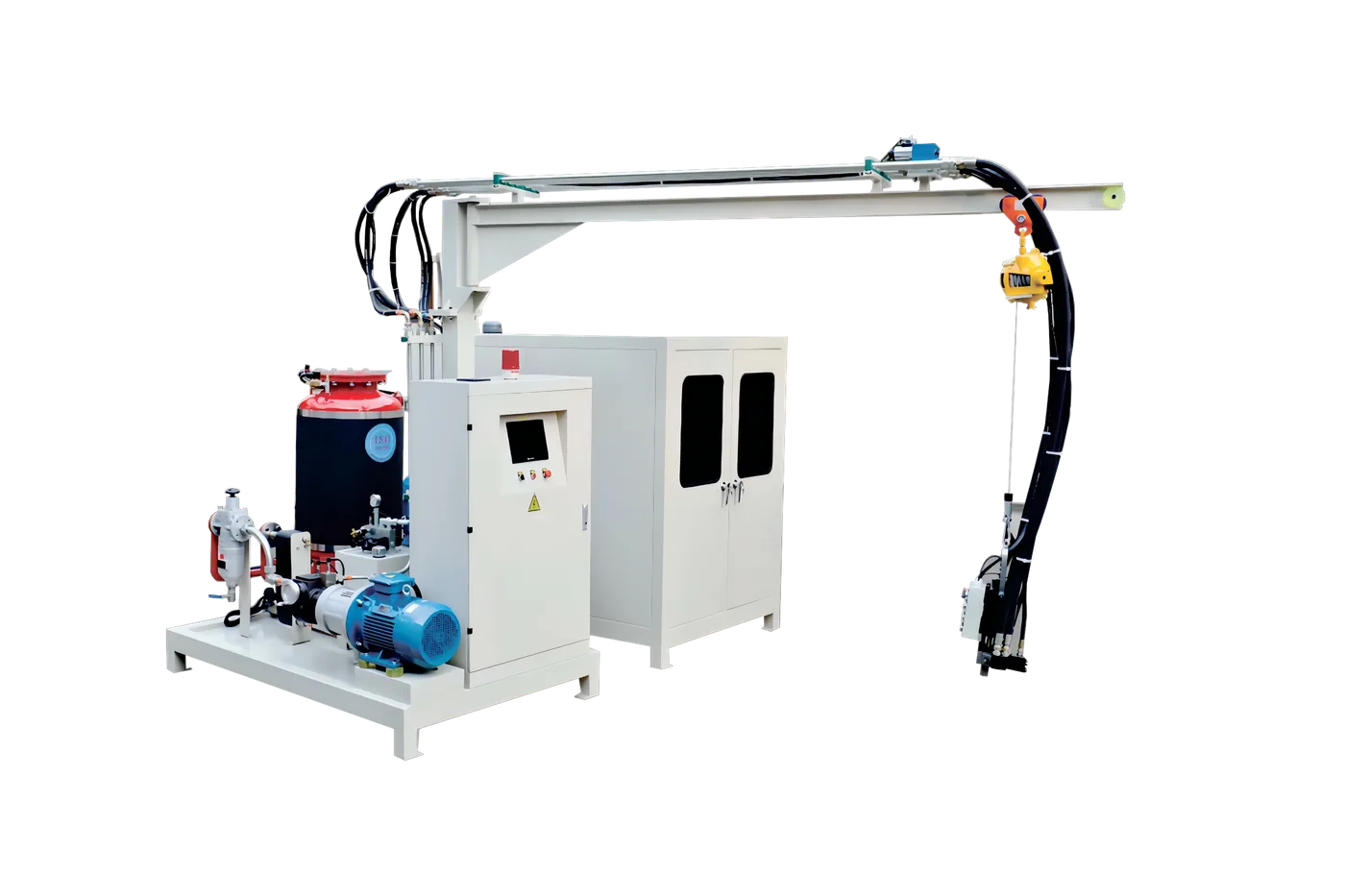
Cyclopentane High-Pressure PU Foaming Machine
Our flagship — purpose-built for refrigerator factories chasing the top EU energy classes (B–C on the 2021 A–G label, formerly A+++). Cyclopentane-ready out of the box with full ATEX Zone 1 safety package. Three sizes covering 500 to 8,000 cabinets a day.
Engineering reply within 24 hours
Quote + spec sheet + tailored sizing recommendation. WhatsApp answered 9 am–6 pm Beijing time.
Teknik Özellikler
- Primary Blowing Agent
- Cyclopentane (also runs HFC-245fa / HFO-1233zd / water)
- Output Range
- 100 – 1,500 g/s (three sizes: 500 / 1,500 / 3,000)
- Output Pressure
- 140 – 200 bar at the mixing head
- Metering Accuracy
- ±0.5% (servo-driven axial piston pumps)
- Mixing Head
- 2 / 3 / 4 component, self-cleaning, hydraulically actuated
- Tank Capacity
- 250L / 500L / 1,000L day tanks per component, jacketed
- Tank Temperature Control
- PID ±0.5°C, chilled water + electric heater dual loop
- N₂ Blanket Pressure
- 0.3 – 0.5 bar continuous on polyol & cyclopentane tanks
- ATEX Rating
- Zone 1 (II 2G Ex db IIB T4) electrics in cyclopentane zone
- Gas Detection
- LEL sensors at 4 points, auto-alarm at 25% LEL, auto-shutdown at 50%
- Recipe Storage
- 50 cabinet recipes stored on Siemens / Mitsubishi PLC, switch in <30s
- Power
- 380V / 440V / 480V · 50Hz / 60Hz, ~25 kW (1,500 g/s size)
- Footprint
- ~24 m² (1,500 g/s with all tanks), serviceable from one side
- Daily Cabinet Output (paired with our line)
- 500 / 2,000 / 8,000 cabinets per day across the three sizes
Uygulamalar
- Household refrigerator cabinet foaming (top-mount, bottom-mount)
- French-door & side-by-side refrigerator cabinet
- Built-in / embedded refrigerator
- Commercial beverage cooler & wine cabinet
- Refrigerator door foaming
- Chest freezer cabinet
- Upright freezer cabinet
- Pharmaceutical refrigerator cabinet
Why cyclopentane (and why it's the default choice for refrigerator factories now)
Cyclopentane is the blowing agent that won the refrigerator industry. About 70% of new refrigerator factories worldwide spec it. Here's the short version of why we built this machine cyclopentane-first.
Cost
Cost: roughly 1× the baseline. HFO-1233zd(E) runs 2.5–3×, HFC-245fa 2× — and HFC is being phased out anyway. On a 500,000-unit-per-year factory, cyclopentane saves USD 1.5–3M a year in raw material cost vs HFO.
Performance
Performance: lowest achievable k-factor of any commercial blowing agent (0.018 W/m·K), which means you can hit the top EU classes on the 2021 A–G label (B–C, formerly A+++) / Japan Top Runner / Australia 4-star without exotic formulation tricks.
Regulation
Regulation: allowed everywhere except a few EU markets that mandate HFO from 2025. The list of "cyclopentane forbidden" countries is essentially zero — the list of "HFC phased out" countries grows every year.
The trade-off
The trade-off: cyclopentane is flammable. Your foaming room becomes a hazardous zone. That's solvable engineering (ATEX equipment, gas detection, ventilation) but the room and the machine both need it. Our machine ships with that whole package built in.
What's inside our cyclopentane high-pressure machine
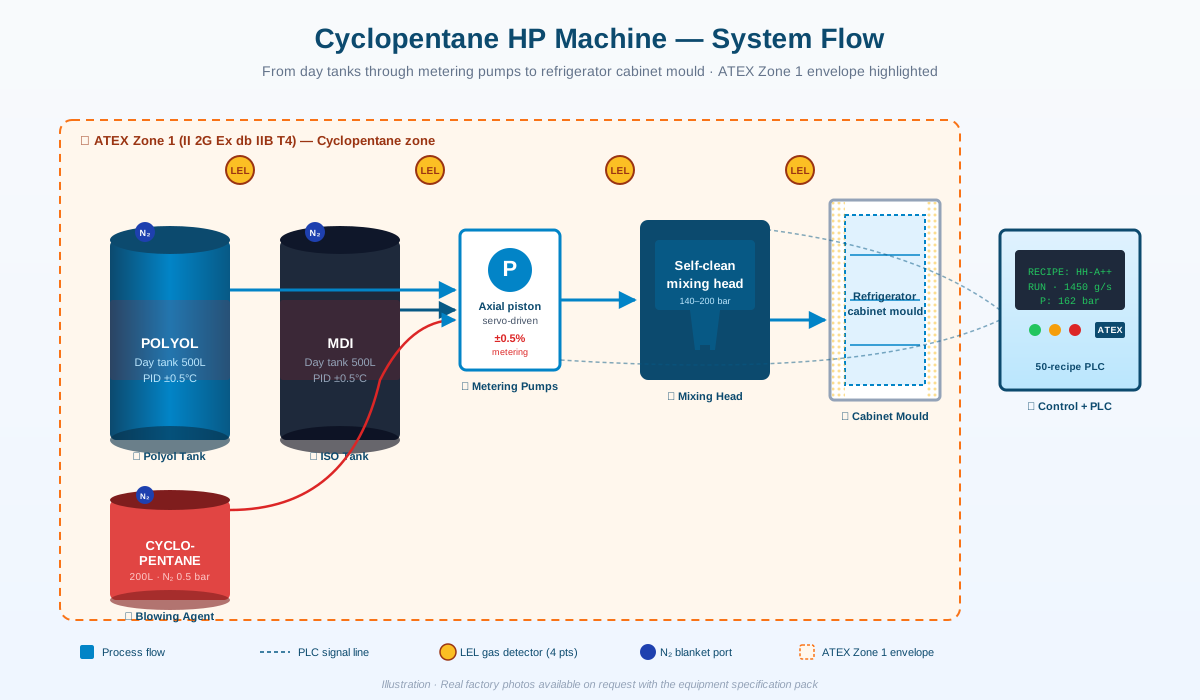
The whole machine is engineered around safely running cyclopentane day-in day-out for 10+ years. Eight major sub-systems, all built to handle the flammability while delivering ±0.5% metering accuracy.
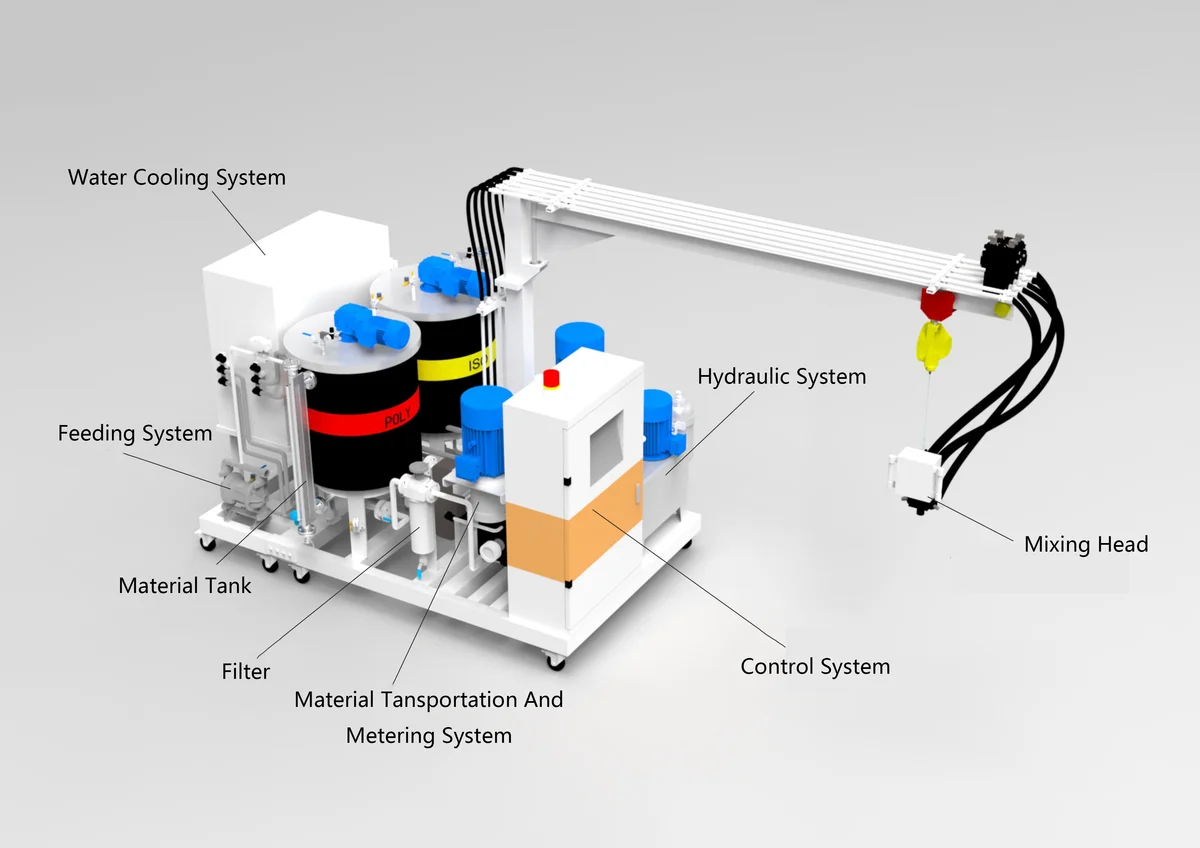
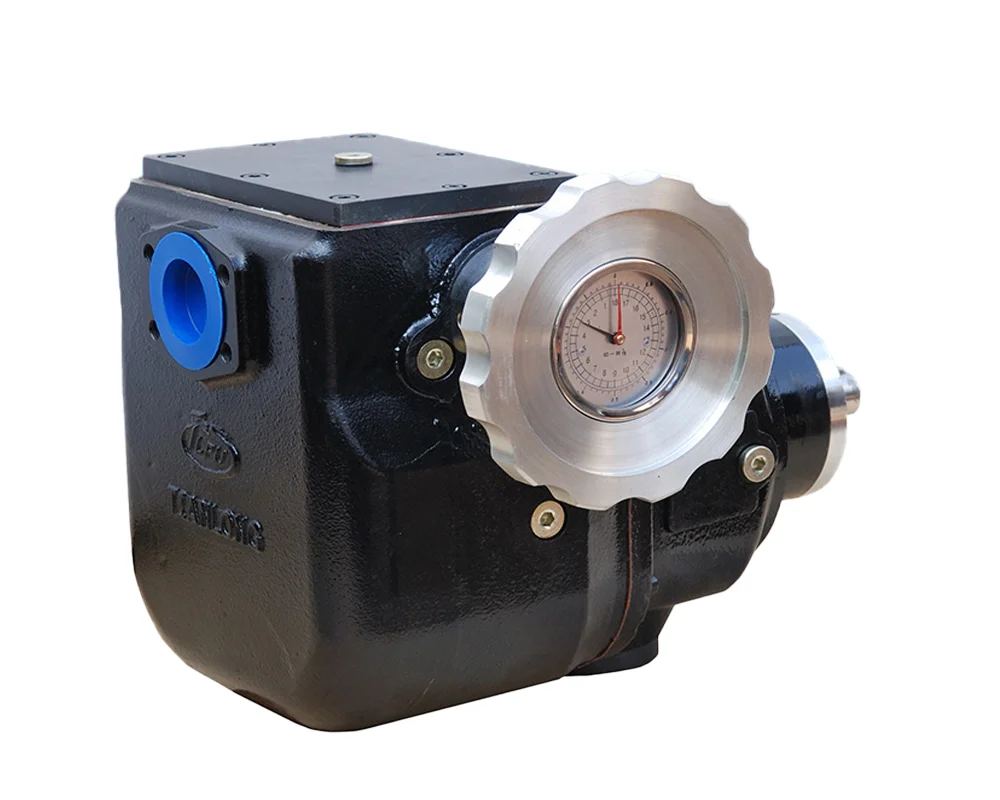
Metering pumps
High-pressure axial piston pumps (Bosch Rexroth A10VSO series) — servo-driven, ±0.5% metering accuracy. We use the same pumps as the major European brands because nothing else in this class delivers the consistency a refrigerator line needs.
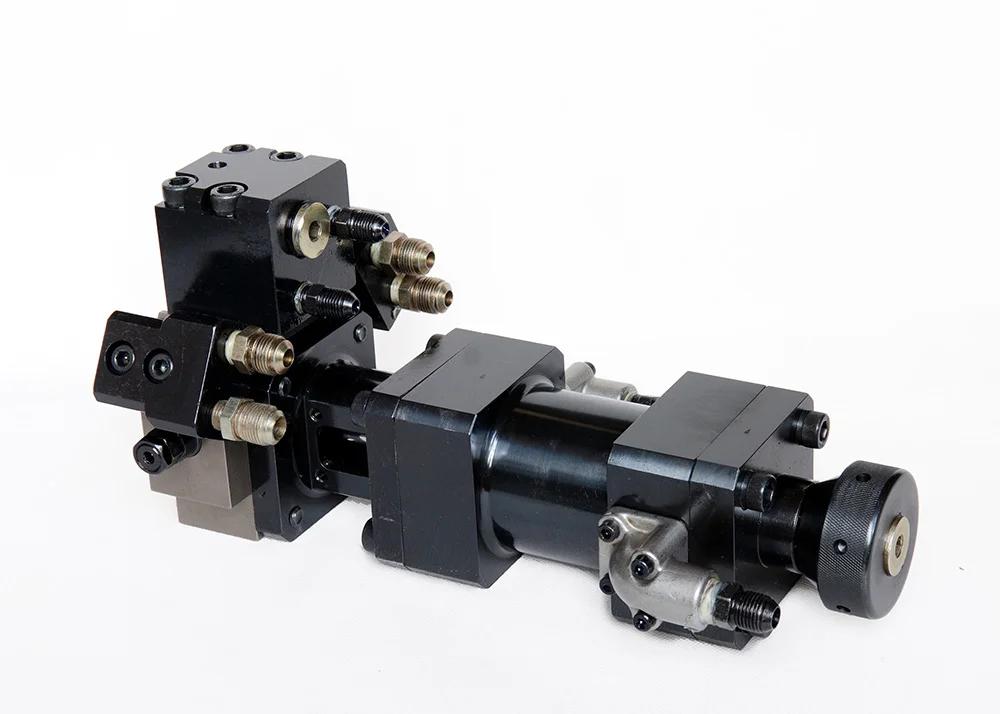
Mixing head (L-type and T-type available)
Self-cleaning mixing head — hydraulically actuated cleaning rod after every shot, no solvent needed. Standard 2K head; 3K and 4K available if you need to inject color or trace additives.
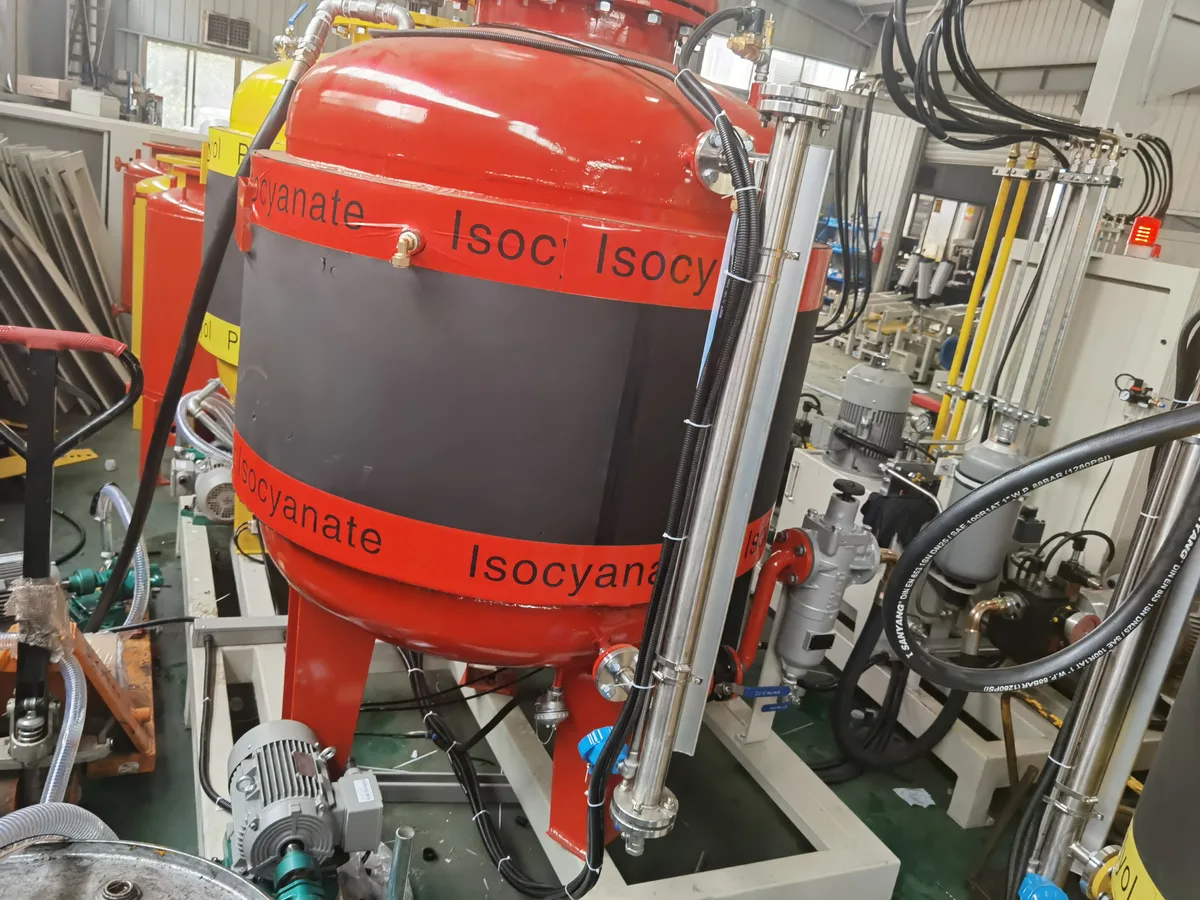
Day tanks (Polyol + ISO)
Jacketed day tanks (250 / 500 / 1,000 L per component) — chilled water + electric heater dual loop, PID ±0.5°C. The cyclopentane tank gets a closed N₂ blanket at 0.3–0.5 bar to prevent oxygen ingress and pressure variance.
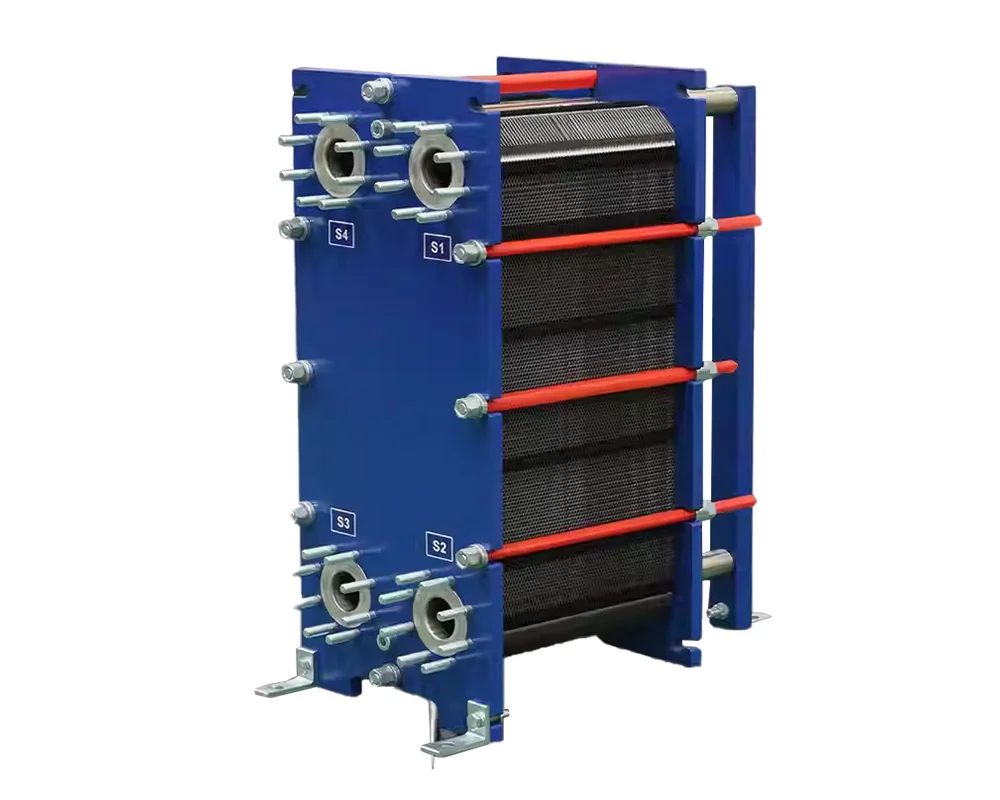
Cooling / heat exchangers
Cooling circuit with chiller — handles the heat of compression on the pumps. A typical 1,500 g/s machine draws 6–8 kW of cooling capacity. We size it for your local ambient (40°C design point in Middle East / Africa, 30°C in Europe).
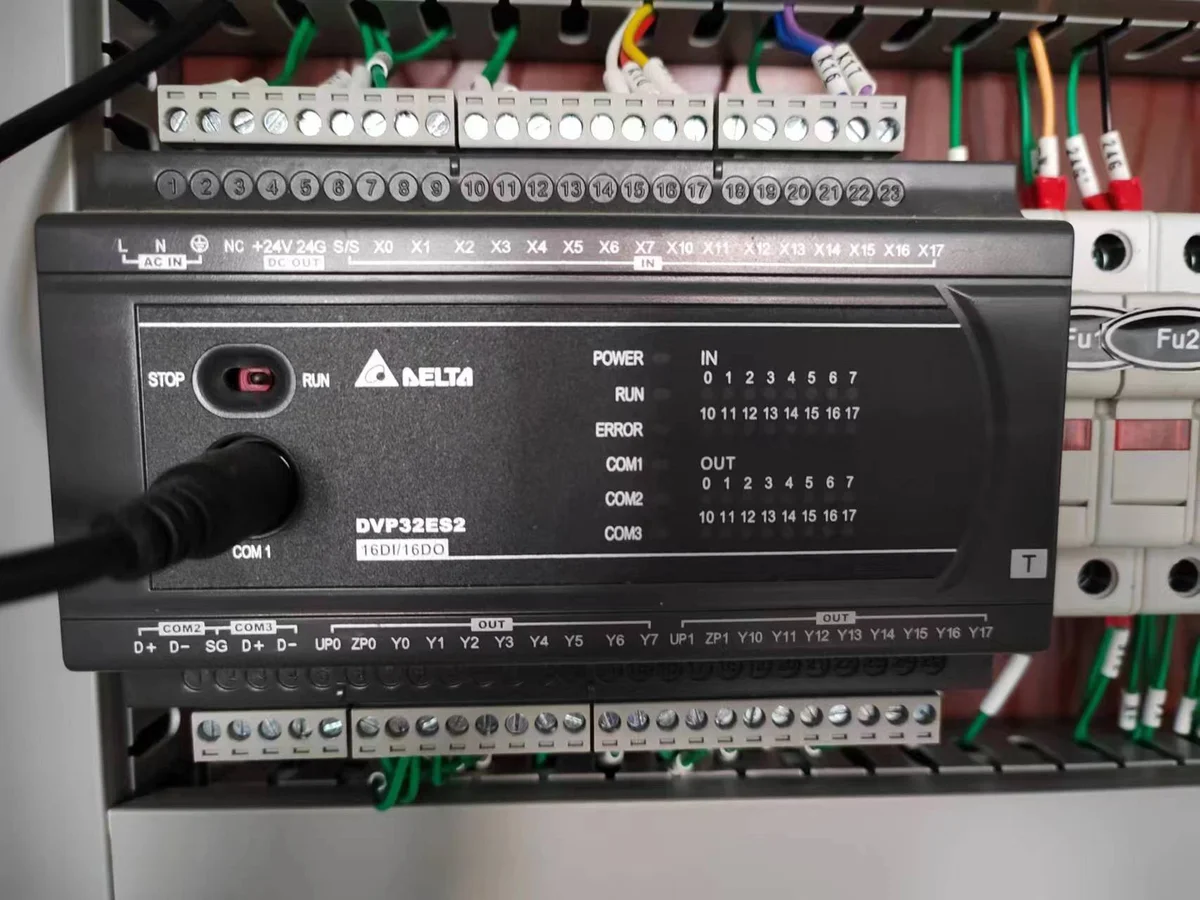
PLC + HMI · ATEX electrics
PLC + HMI (Siemens S7-1500 or Mitsubishi Q-series, your choice) with 50-recipe storage. Switch between cabinet recipes in under 30 seconds. Production logging with 1-second granularity, exportable to your MES. ATEX-rated electrical enclosure (II 2G Ex db IIB T4, Zone 1 inside) — every cable, junction box, sensor and motor in the cyclopentane zone is rated for explosive atmosphere. Gas detection sensors at 4 points trigger auto-alarm at 25% LEL and auto-shutdown with N₂ flooding at 50%.
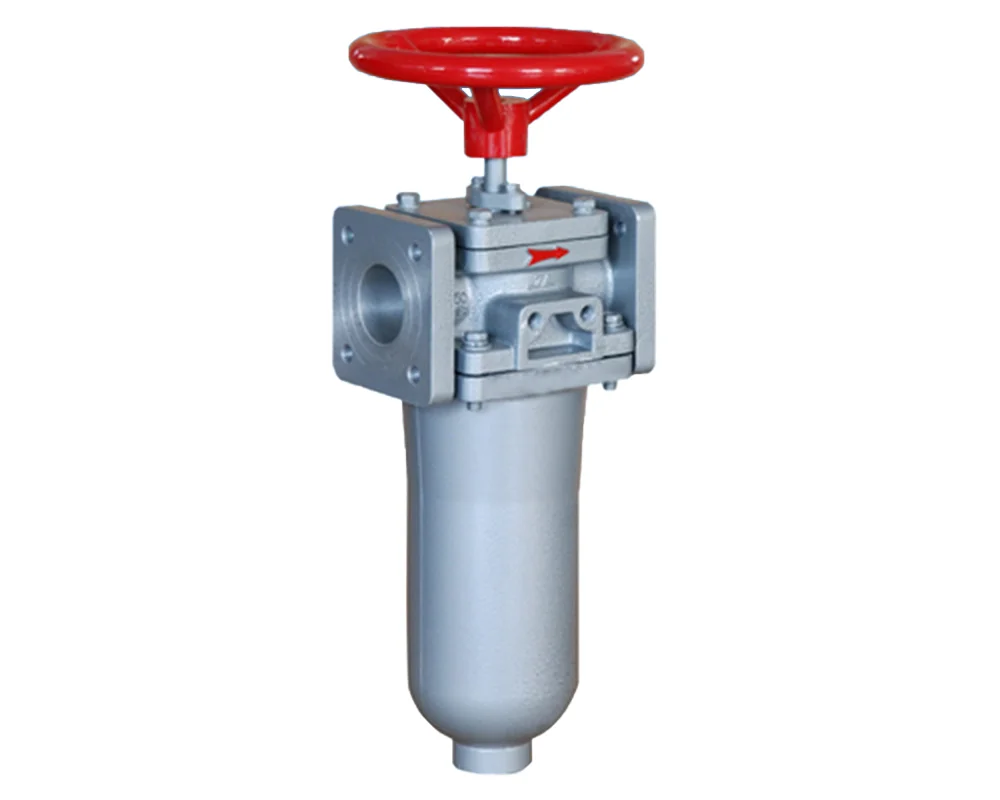
Feed-line filters · CIP cleaning
CIP (Clean-In-Place) self-cleaning cycle — programmable solvent flush of the mixing head, hoses, and pump heads for end-of-shift or recipe-change cleaning. Reduces manual intervention by 80%. Nitrogen distribution & blanket system — single N₂ supply feeds the polyol tank, cyclopentane tank, mixing head purge, and emergency shutdown flood. We provide the nitrogen generator if your plant doesn't already have N₂ infrastructure.
▸ See the full system flow diagram (illustration)
The ATEX safety package — what your fire department will want to see
Cyclopentane is flammable. Your foaming room becomes a Zone 1 (continuous risk) inside the equipment envelope and Zone 2 (occasional risk) outside it. Most refrigerator buyers spend more time worrying about ATEX approval than about the machine itself. Here's how we make that easy.
Enclosure & electrics
Every electrical component in the Zone 1 envelope is rated II 2G Ex db IIB T4. Standard junction boxes, motor terminations, sensor housings — all certified. We supply the EU type-examination certificates as a PDF pack.
Gas detection
LEL gas detectors at four points around the machine (under the mixing head, near the cyclopentane tank vent, near the day tank manhole, near the pump bay). Calibrated at install, calibration record stays with the machine documentation.
Alarms & shutdown
Auto-alarm at 25% LEL (visual + audible, machine slows down). Auto-shutdown at 50% LEL (machine stops, mixing head locks open, N₂ flood activates, your fire panel gets notified via dry contact).
Ventilation spec
We don't supply the room ventilation but we provide the design spec: minimum 6 air changes per hour, exhaust at floor level (cyclopentane vapor is denser than air), all electrical in the room ATEX-rated to match the zone classification.
Operator training
Every machine ships with operator training material covering ATEX-specific procedures — what to do if an LEL alarm fires, how to isolate the cyclopentane tank, emergency manual N₂ flood. We train your operators on this during commissioning.
Past approvals
We've passed ATEX approval (or equivalent local fire approval) at refrigerator factories in EU, Russia, Turkey, Brazil, Saudi Arabia, Egypt, Vietnam, Indonesia, India. Past approval files are available — they make your local approval process much faster.
Three machine sizes mapped to your daily cabinet output
Pick by daily output, not by gut feel. Oversizing wastes capex and gives slow cycle times; undersizing creates bottlenecks. Here's how we sit it with our refrigerator factory customers.
| Machine size | Output (g/s) | Daily cabinets | Factory type | Power draw |
|---|---|---|---|---|
| UPM-HP-500 | 100 – 500 | 500 – 2,000 cabinets/day | Small / mid-size factory, single shift | ~15 kW |
| UPM-HP-1500 | 200 – 1,500 | 2,000 – 5,000 cabinets/day | Mainstream household refrigerator OEM, 2-shift | ~25 kW |
| UPM-HP-3000 | 500 – 3,000 | 5,000 – 8,000+ cabinets/day | Large multi-line plant, 3-shift continuous | ~40 kW |
If your output mix includes very different cabinet sizes (e.g. 200L bottom-mount + 700L French-door on the same line), we may recommend two smaller machines rather than one big one — quicker recipe changeover, less waste during shot-weight transitions.
How we deliver a top EU energy class (B–C on the 2021 label, formerly A+++) on this machine: the parameter table
Energy class is a recipe problem, not a machine problem. Same machine can land at the top of the EU A–G label or three classes lower depending on how you set it up. Here's the parameter table we hand out with every machine + matching PU system shipment.
| Target class | k-factor | Molded density | Cream time | Gel time | Mould temp |
|---|---|---|---|---|---|
| EU B–C (2021 label, former A+++) / JP Top Runner | 0.018 W/m·K | 32–35 kg/m³ | 7s | 42s | 42–45°C |
| EU D–E (mainstream, former A++) | 0.020 W/m·K | 35–38 kg/m³ | 8s | 45s | 40–45°C |
| EU E–F (former A+) / value lines | 0.022 W/m·K | 38–40 kg/m³ | 9s | 50s | 38–42°C |
Pump pressure (~160 bar typical), shot weight (varies by cabinet, 600–1,200g), and ISO-to-polyol ratio (1.05–1.15:1) are tuned in commissioning. The PLC stores all of this as a named recipe — your operator picks the cabinet from a list, the machine sets itself.
Installation, commissioning, training: what happens after the container lands
Civil works, machine assembly, first-batch foaming, operator training — about 6–10 weeks from container arrival to handing the line over to your team.
- 1
Week 1–2 — Civil works at your site (foundation pad, N₂ supply, electrical hookup, ventilation, drainage). We send a printed checklist + drawings before container ships.
- 2
Week 3 — Container arrives. Two of our engineers fly in. Crane the components off the container, position on the foundation, connect piping and electrical.
- 3
Week 4 — Cold commissioning: power up, leak tests, calibration of gas detectors, calibration of pumps. ATEX inspection by your local authority happens here if required.
- 4
Week 5 — Hot commissioning: first foaming runs with water-blown trial recipe (no cyclopentane yet, just to validate the mechanics). Then switch to cyclopentane, run 50 trial cabinets.
- 5
Week 6 — Operator training (4–6 people, mix of foaming operators + maintenance + line supervisor). About 3 days of classroom + 2 days hands-on.
- 6
Week 7 — Production ramp. Our engineers stay through the first 100 production cabinets. Sign-off and handover after.
- 7
Week 8 onward — Remote support via PLC remote diagnostics. Engineer return visit at 3 months and 12 months included free.
Spare parts, service, the long-game cost picture
The machine is built to run for 10+ years on a 3-shift refrigerator factory. Here's the ongoing cost shape so you can budget properly.
Warranty
Standard warranty: 2 years on pumps, mixing heads, PLC. 1 year on wear items (seals, filters, gas detectors). Extended 4-year warranty available at order time (+5% of equipment cost).
Spare parts kit
Recommended spare parts kit at order: about 5% of machine cost. Covers 2 years of routine wear (seals, O-rings, filter elements, mixing head wear plates, LEL sensor head replacement).
Stock locations
We stock buffer spares in three locations: Shanghai (main warehouse), Istanbul (covers EU / Russia / MENA), Dammam (GCC + East Africa). Critical parts ship in 2–5 days.
Remote diagnostics
Remote diagnostics included for 2 years (free), then USD 3,000 / year. Lets us pull PLC logs and walk your operator through fixes without a site visit. About 70% of issues we resolve this way.
Routine maintenance
Routine maintenance cost: 2–4% of equipment cost per year for wear parts. Heavier service (pump rebuild, mixing head overhaul) every 4–5 years runs another 5–8%.
Operator training refreshers
Refresher training for new operators: USD 500 / day at your site, free remote sessions. We also keep training videos on a private channel for your team.
Why this machine works best with our PU system
A machine and a chemistry that have never worked together still need 1–2 months of mutual calibration. We ship our machine pre-tuned for our PU system — saves you that integration time, gives you one supplier accountable for the whole foam result.
Formulation match. Our cyclopentane-grade polyol is formulated against the metering characteristics of this exact machine — pump compatibility, shear sensitivity, gel time matched to standard cabinet cycle times.
Parameter card with every shipment. Every PU shipment includes a parameter card listing target machine settings for that batch (tank temperatures, mixing pressure, shot weight, cream/gel/tack-free time). Your operator dials those settings on this machine's HMI — no R&D needed.
One supplier, one accountability. When something goes wrong with foam quality, you have one supplier to call. We can't blame the chemicals if you have a machine issue, and vice versa.
İlgili Ürünler
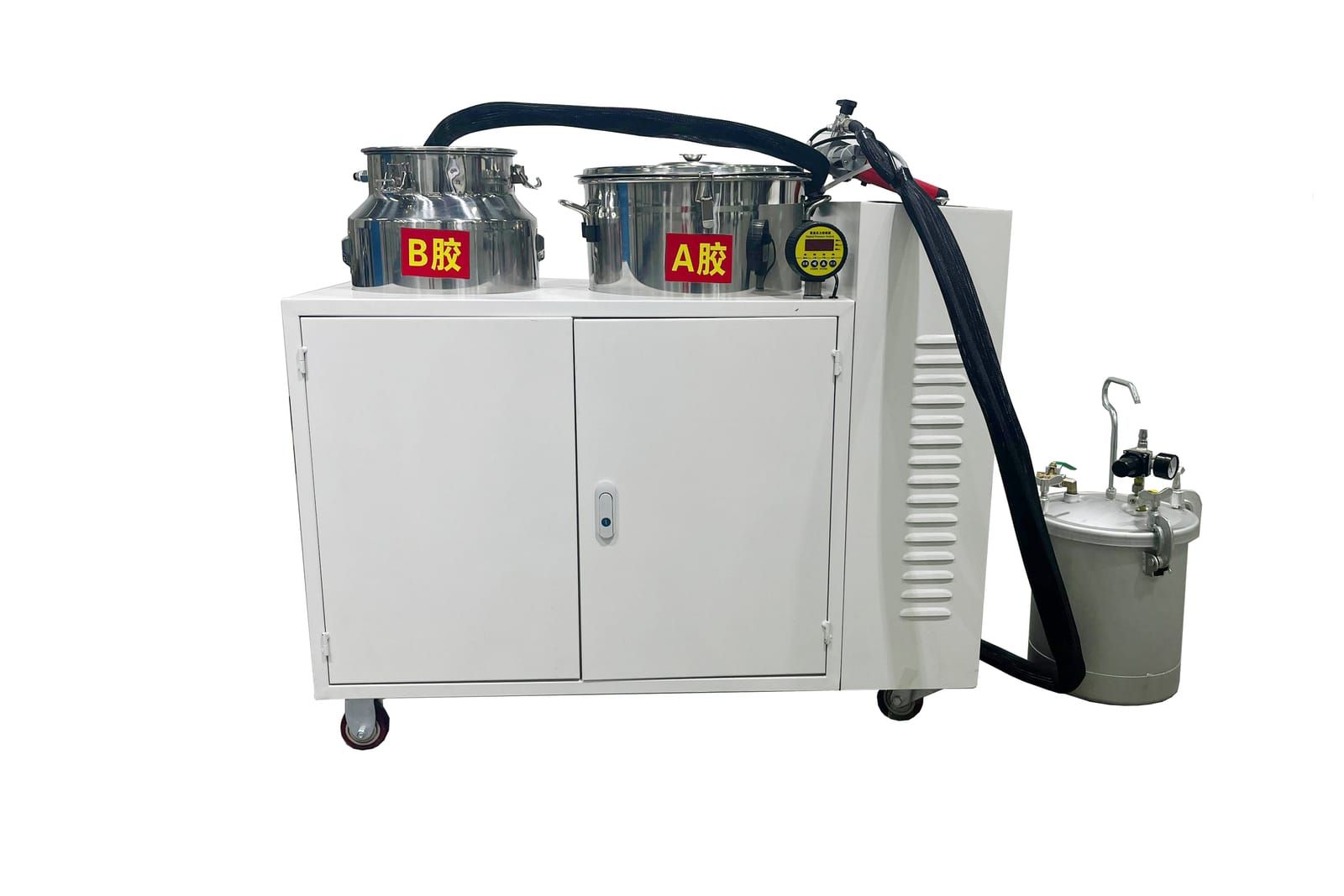
Two-Component PU Adhesive Dispenser — Cold Room Panel Lamination
Built specifically for cold room sandwich panel production — bonds the steel facing to the PU foam core with two-component PU adhesive. 500–2,500 m² of panel per shift, ±1% mix ratio, integrates into continuous or discontinuous panel lines.
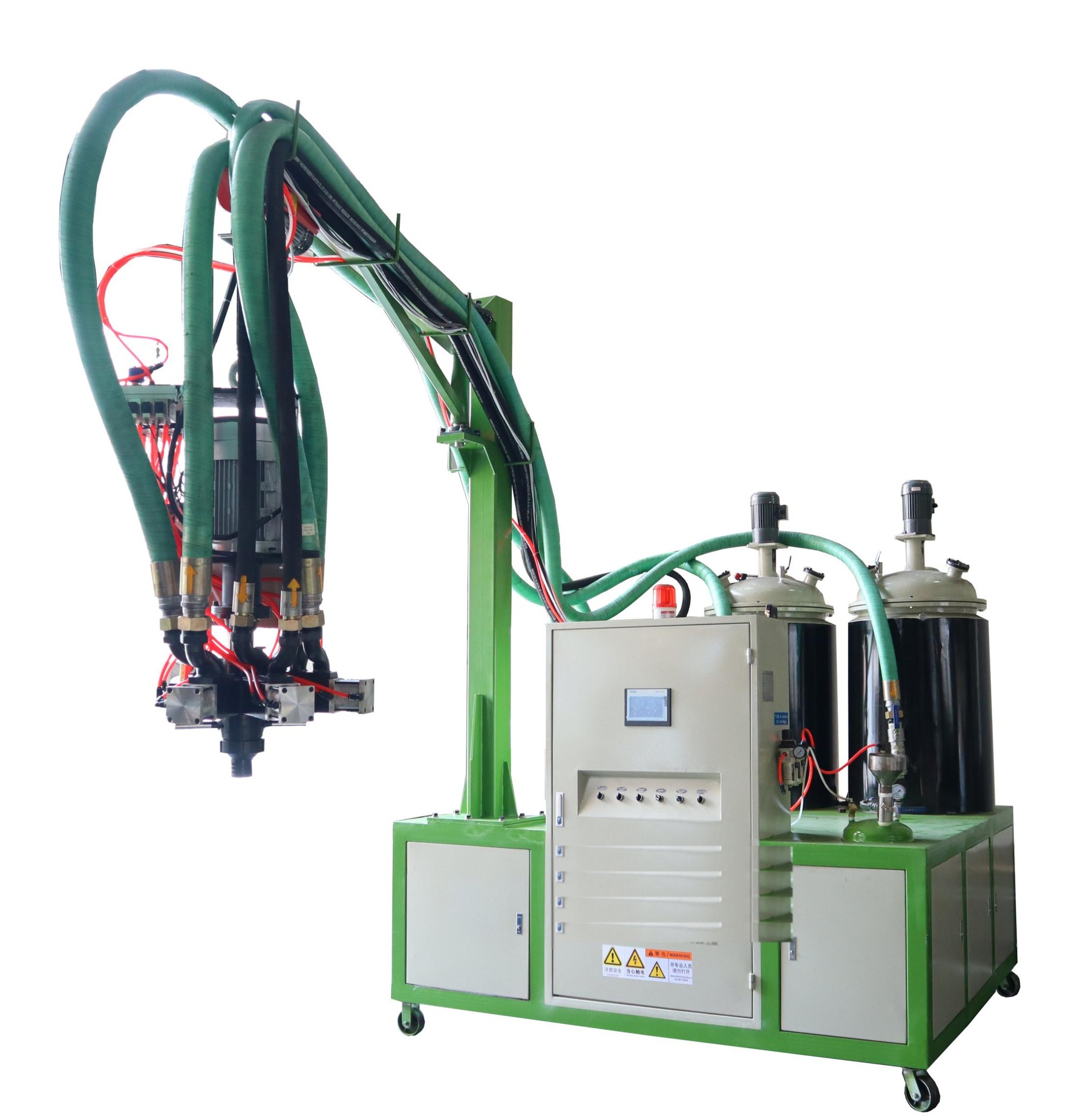
Low-Pressure PU Foaming Machine
Smaller, more flexible machine for wine cabinets, mini-bars, vaccine boxes and R&D pilots. Quick recipe switches when you run dozens of small cabinet variants. 5–250 g/s output.
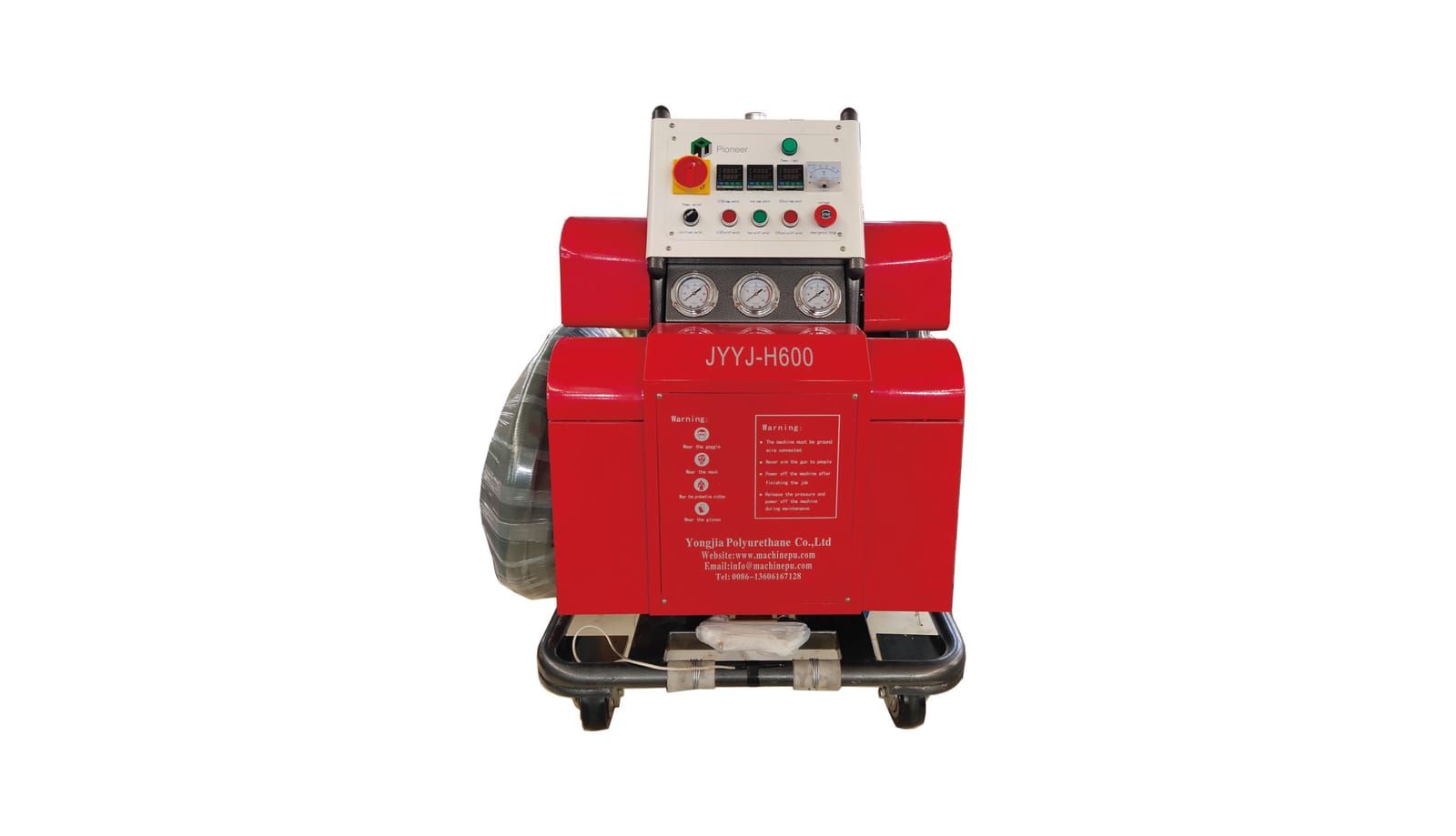
Spray Foam Equipment for Cold Storage Insulation
Spray foam for the refrigerator cabinets a high-pressure machine can't reach — oversized supermarket islands, curved commercial freezers, thick-wall ultra-low-temp boxes, on-site liner repair. 5–20 kg/min.
Cross-Sell · One-Partner Synergy
Pair This Foaming Machine With Moulds + Materials
Foaming machines run best on properly engineered moulds and calibrated raw materials. Buy together for full-line synergy.
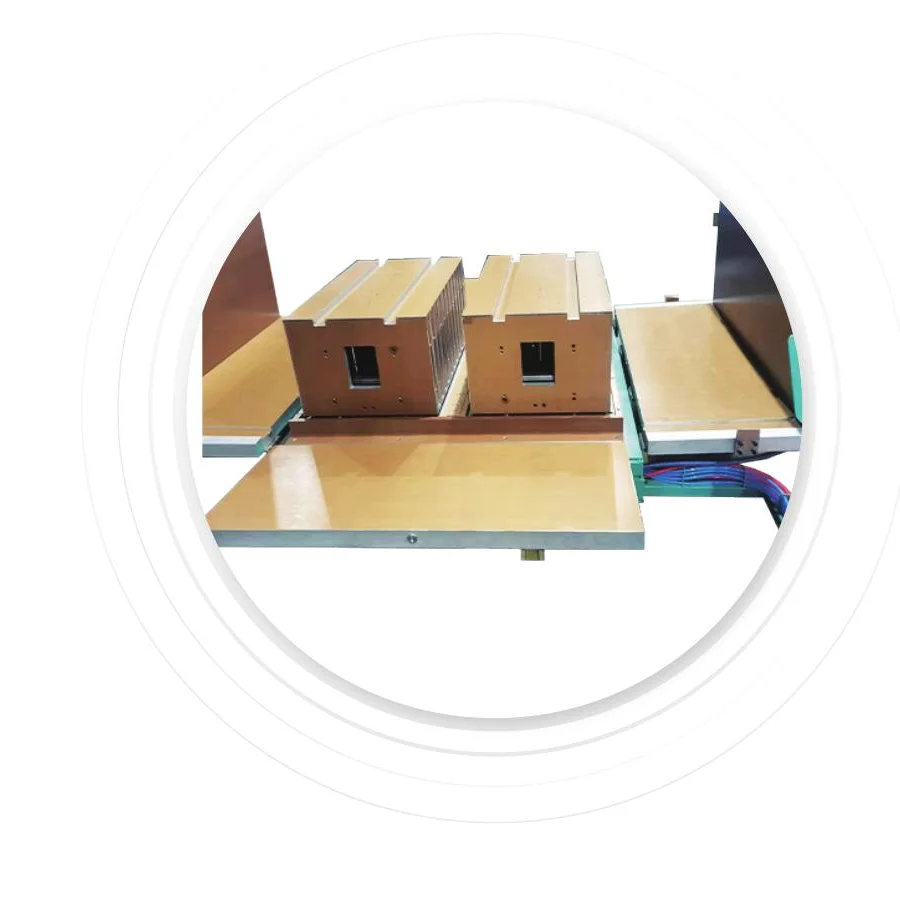
Refrigerator-Grade Moulds
Vacuum-forming moulds for inner liners + foaming moulds for cabinet/door — 30-year cluster network.
Learn more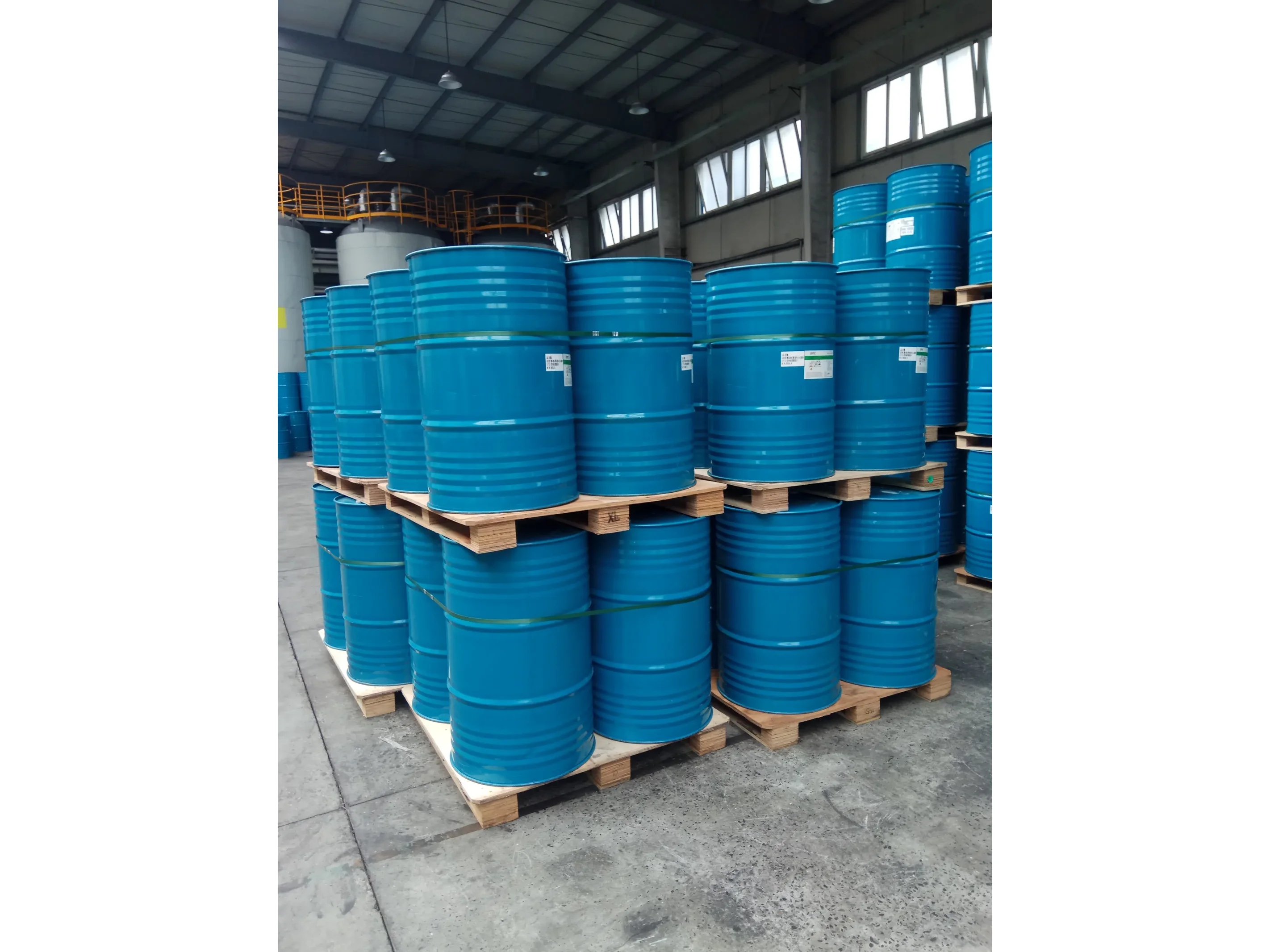
PU Raw Materials
MDI + Polyol formulations matched to your machine output, density target, and local climate.
Learn more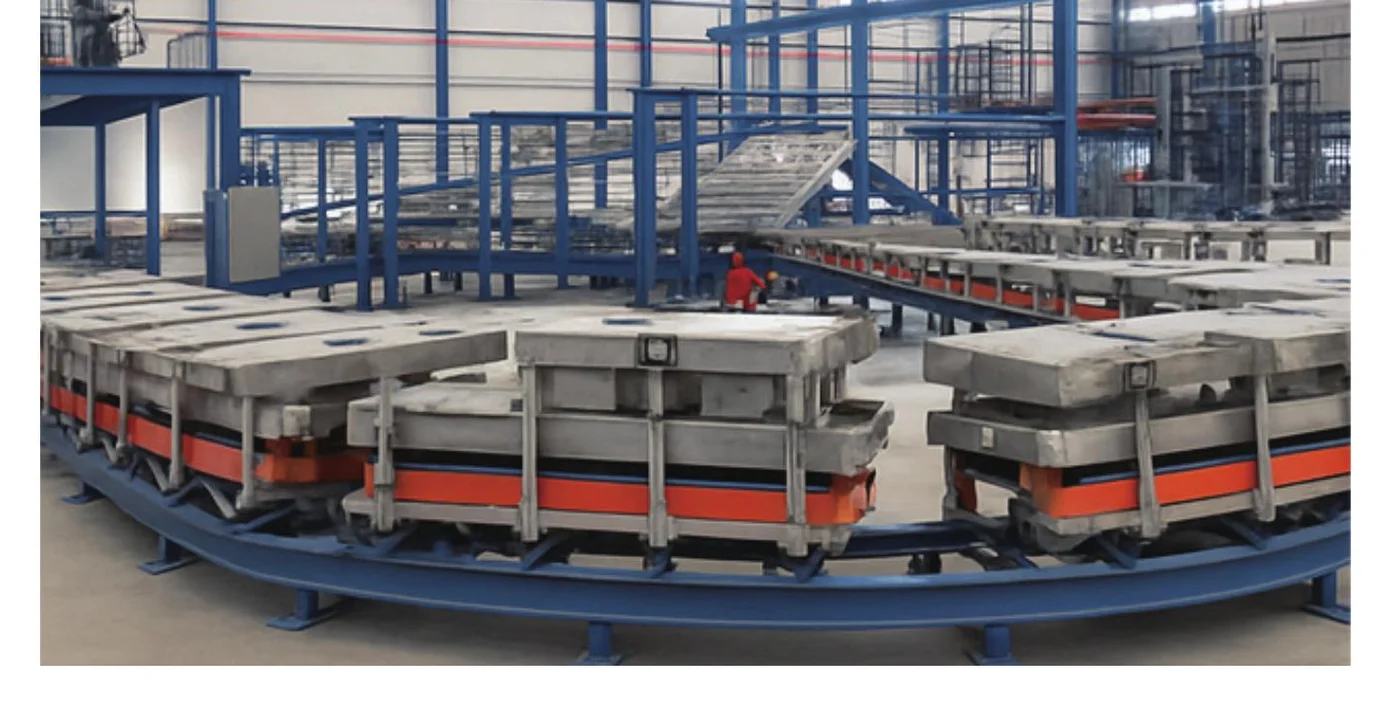
Refrigerator Production Line
Cyclopentane high-pressure foaming is the heart of our turnkey refrigerator factory solutions.
Learn moreService & Support
Warranty & Service
On-site intervention available in every region where we have delivered projects.
On-Site Installation
Our engineers fly to your factory to supervise installation, layout verification, and first-run production.
Commissioning + Tuning
Trial run + parameter tuning to your local raw material, climate, and target product spec — until throughput meets contract.
Operator Training
5-10 day on-site training for production team, QC, and maintenance — bilingual manuals + video tutorials provided.
3-Year Warranty + Spares
Core equipment 3-year warranty, electrical 2-year. Spare parts in stock with global express shipment 24h dispatch.
Sıkça Sorulan Sorular
We currently run HFC-245fa. What does switching to cyclopentane involve?
What ATEX rating does the machine carry? Will my fire department approve it?
How many machines do I need for a 5,000,000-unit-per-year refrigerator plant?
How does your machine compare to the well-known European brands?
How long does commissioning take? And do you send people?
What's the maintenance cost per year?
Do you stock spare parts outside China?
What voltage / frequency does it support?
Can you trade in or refurbish second-hand machines?
Can you run something other than cyclopentane on this machine?
Komple bir soğutma çözümüne mi ihtiyacınız var?
UREXCEED, 6 ortak fabrika üzerinden kalıpları, köpük makinelerini, üretim hatlarını ve malzemeleri entegre eder. Kapasite hedefinizi söyleyin, 24 saat içinde yapılandırma ve teklif gönderelim.