
Cold Storage Panel Production Line — Setup, Cost & Capacity Guide
A complete guide to investing in a cold storage sandwich panel production line: 5 core stations, capacity planning tables, USD 450K–1.09M investment breakdown, quality standards, and a 4–6 month project timeline.
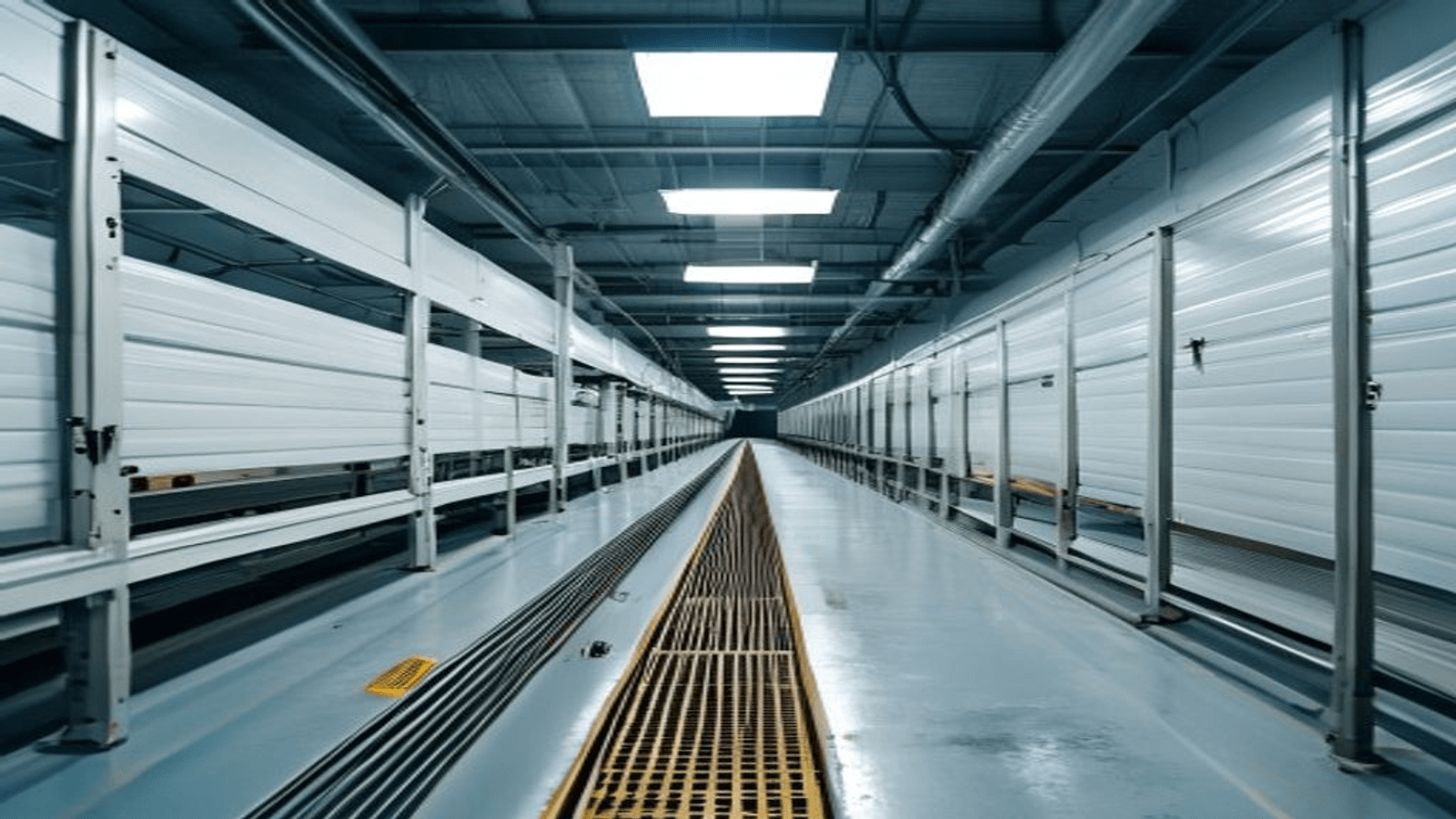
A continuous cold storage panel line has 5 stations (decoiler → foaming → curing → cutting → stacking). A 6 m/min line produces ~240,000 panels/year at 80% OEE. Total turnkey investment ranges USD 450K–1.09M depending on line speed, blowing agent and automation level. Key certifications: EN 14509, FM 4880, ASTM E84. Typical project timeline from inquiry to first panel: 4–6 months including FAT, installation, training and OEE ramp-up.
Why cold storage panels are a high-growth manufacturing opportunity
Global cold chain infrastructure investment exceeded USD 340 billion in 2025, driven by pharmaceutical logistics, fresh food e-commerce, and tightening food safety regulations across Asia, Africa and Latin America. At the core of every cold room, blast freezer and temperature-controlled warehouse sits the insulated sandwich panel — typically a polyurethane or PIR core bonded between pre-coated steel or aluminium facings.
For manufacturers already operating in the refrigeration equipment space, adding a cold storage panel production line is a natural adjacency: the raw materials overlap (PU systems, blowing agents), the customer base overlaps (cold chain contractors, food processors, logistics companies), and the margin profile is attractive — panel lines run at 60–70 % gross margin once throughput stabilises.
What a cold storage panel line actually consists of
A continuous sandwich panel production line has five core stations, each with distinct engineering requirements:
- Coil decoiling and profiling — Steel coils (0.3–0.6 mm, colour-coated or stainless) are unwound, levelled, and roll-formed into the panel facing profile. Line speed is typically 4–8 m/min for standard panels.
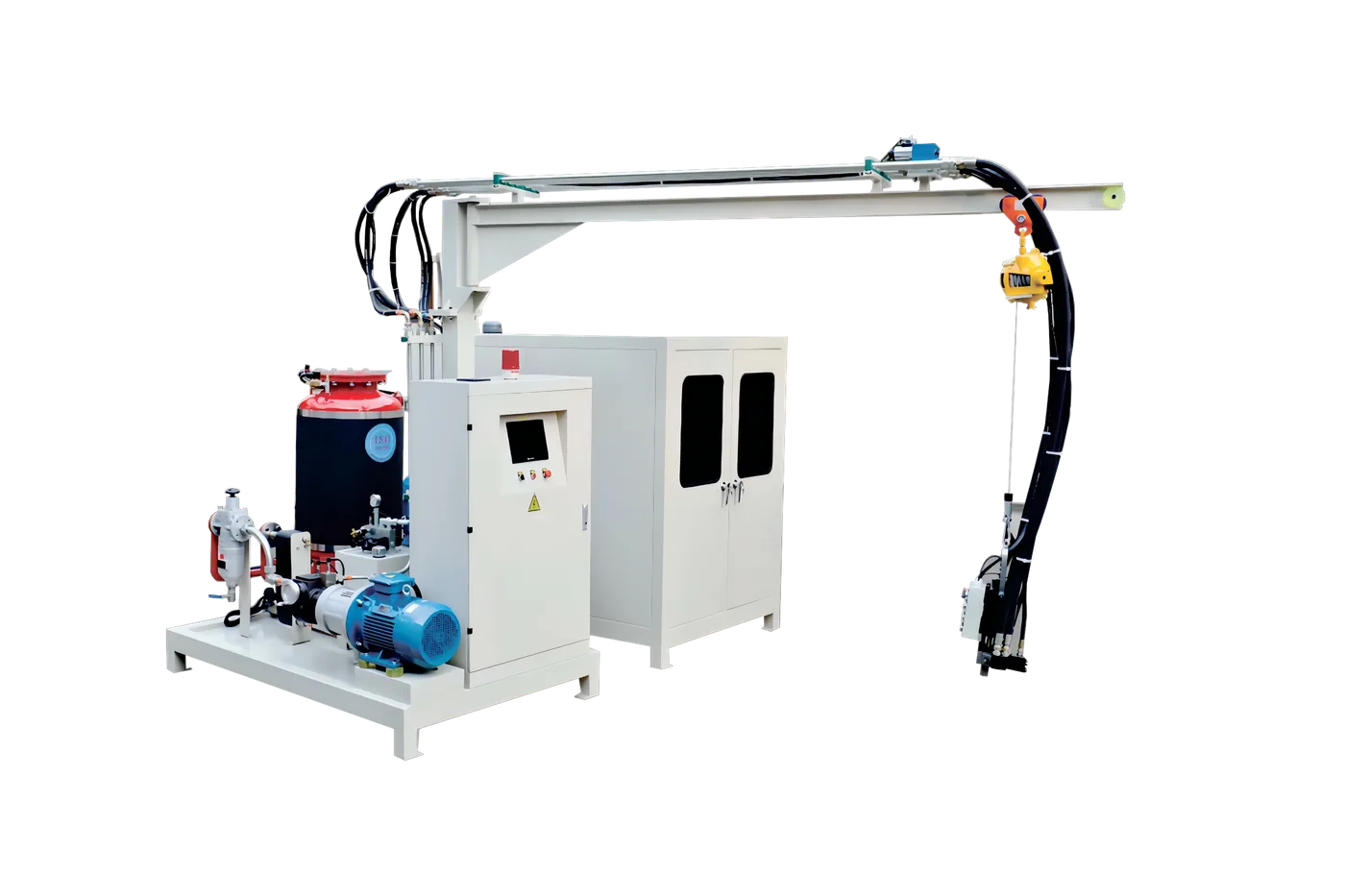
- Foaming station — A high-pressure PU foaming machine injects the polyol + isocyanate + blowing agent mix between the upper and lower facings inside a heated double-belt laminator. Panel thickness (50–200 mm) is set by adjusting belt gap. The blowing agent choice (cyclopentane vs HFC vs HFO) follows the same trade-offs covered in our blowing agent comparison guide.
- Curing oven / double-belt press — The foam expands and cures under controlled temperature (40–60 °C) and pressure. Belt length determines cure time and therefore maximum line speed. A 25-metre belt at 6 m/min gives ~4 minutes of cure — enough for most rigid PU systems.
- Cross-cutting and edge-trimming — A flying saw cuts panels to length without stopping the line. Edge trimmers clean the foam flash from tongue-and-groove or cam-lock joint profiles.
- Stacking and packaging — Finished panels are automatically stacked, wrapped, and staged for shipping. Panel weight (30–80 kg each for 1 m × 2.4 m standard) requires hydraulic stacking arms.
Capacity planning: how many panels per shift?
| Line speed | Panel length | Panels / 8h shift | Annual output (250 days) |
|---|---|---|---|
| 4 m/min | 2.4 m | ~640 | ~160,000 panels |
| 6 m/min | 2.4 m | ~960 | ~240,000 panels |
| 8 m/min | 2.4 m | ~1,280 | ~320,000 panels |
Assumes 80 % OEE (overall equipment effectiveness) — typical for a well-maintained continuous line with trained operators. New installations often start at 65–70 % OEE in month 1 and reach 80 % by month 3–4.
Most new entrants start with a 4–6 m/min line. This covers the domestic cold room contractor market (50–500 panels/order) with room to grow. Upgrading to 8 m/min later usually requires only a longer curing belt and faster saw — the foaming machine and decoiler are the same.
Investment breakdown: what does a panel line cost?
| Component | Budget range (USD) | % of total |
|---|---|---|
| High-pressure PU foaming machine | 120,000–280,000 | 25–30 % |
| Double-belt laminator (25–30 m) | 150,000–350,000 | 30–35 % |
| Decoiler + roll former (×2) | 60,000–120,000 | 12–15 % |
| Flying saw + edge trimmer | 40,000–80,000 | 8–10 % |
| Stacker + packaging | 30,000–60,000 | 6–8 % |
| Safety & ventilation (cyclopentane) | 50,000–200,000 | 5–15 % |
| Total turnkey | 450,000–1,090,000 | 100 % |
The range is wide because it depends on three variables: line speed (4 vs 8 m/min), blowing agent (cyclopentane adds safety capex; HFC/HFO does not), and automation level (manual stacking vs robotic palletising). UREXCEED scopes every project individually — request a quotation with your target panel specs and daily output, and our engineering team will return a detailed cost model within 48 hours.
Raw material supply: what you need on day one
- Pre-coated steel coils — Typically PPGI (pre-painted galvanised iron) or stainless steel for food-grade applications. Coil weight 3–8 tons each, 2–4 week lead time from domestic mills.
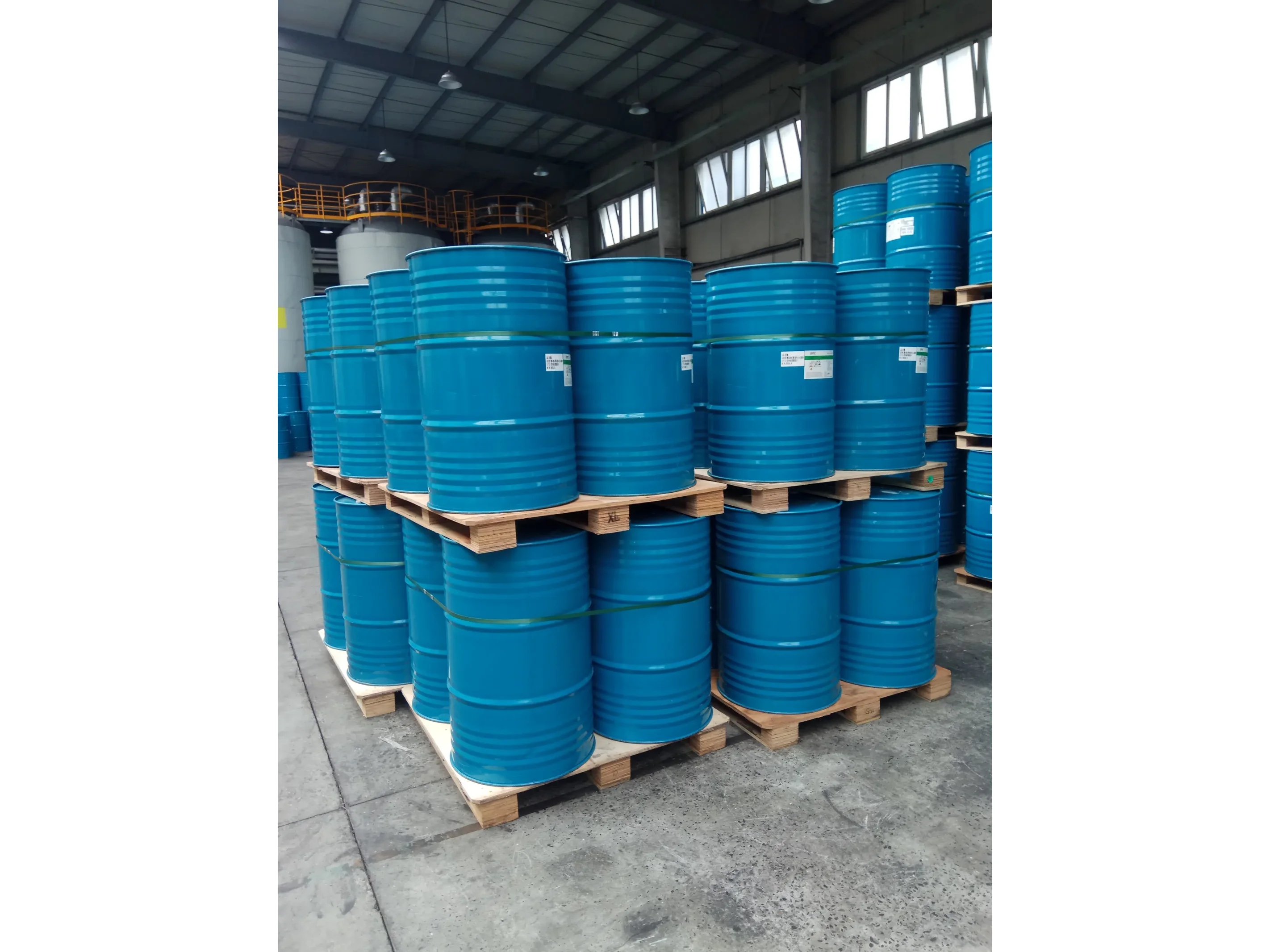
- PU raw material system — Polyol blend + MDI isocyanate + blowing agent. We supplies pre-formulated systems optimised for panel applications, including technical data sheets and recommended processing parameters.
- Adhesion promoter — For metal-to-foam bond strength. Applied inline via roller or spray before the foaming station.
- Cam-lock hardware (optional) — If your panels use cam-lock joints rather than tongue-and-groove, the locking hardware is embedded during production. We supply these as part of our hardware and accessories package.
Quality standards your panels must meet
Cold storage panels are structural and safety-critical. Before you ship the first panel, your factory should be certified or at least tested against:
- EN 14509 — European standard for self-supporting double-skin metal-faced insulating panels. Covers mechanical strength, thermal performance, and fire reaction.
- FM 4880 / FM 4881 — Factory Mutual approval for insulated wall and roof panels. Required by most international insurance underwriters for cold storage facilities.
- ASTM E84 Class A — Flame spread and smoke development. Mandatory for panels sold into the US market.
- ISO 8990 / ISO 9869 — Thermal transmittance testing. Your panels must deliver the stated U-value under steady-state conditions.
- GB/T 23932 — Chinese national standard for building sandwich panels. Required for domestic sales in China.
Certification covers the panel; the finished room is judged against a separate set of rules once workers enter it. If your panels are destined for US walk-in cold rooms and freezers, check which OSHA rules apply to a walk-in freezer at the handover and acceptance stage, so egress, lockout points and interior release hardware are agreed before commissioning.
We helps clients navigate certification by providing foam samples for third-party testing, fire reaction test reports for PU systems we supply, and introductions to accredited testing laboratories in China and Europe.
Getting started: from inquiry to first panel in 4–6 months
A typical UREXCEED cold storage panel line project follows this timeline:
- Month 1 — Requirements workshop: panel specs (thickness, facing material, joint type, fire class), target output, factory layout review.
- Month 2 — Engineering design finalisation, component procurement begins.
- Month 3–4 — Manufacturing and factory acceptance testing (FAT) at our Jiangyin facility. Clients are invited to witness FAT and approve performance metrics.
- Month 4–5 — Shipping, installation, and commissioning on-site. We engineers supervise installation and run the first production trials.
- Month 5–6 — Operator training, PU formulation optimisation, OEE ramp-up to 80 %+. Handover and warranty activation.
Ready to explore whether a polyurethane cold room panel machine fits your factory expansion plan? Contact our engineering team — we respond within 24 hours, and there is no charge for the initial feasibility assessment.
Related engineering deep-dives
The cold-room panel line stack sits inside a larger PU sandwich panel manufacturing discipline. For the line-type selection between continuous and discontinuous variants, see Continuous vs Discontinuous PU Sandwich Panel Line. For the 12-point RFQ evaluation framework we score every supplier against, see How to Choose a PU Sandwich Panel Production Line. For the full CAPEX + OPEX + payback math by tier, see Cold Room Panel Production Line Cost 2026. For the mechanical process walked stage by stage, see Cold Room Panel Production Process. For adjacent cold-chain product lines, see Portable Icebox PU Foam Core and HVAC AHU Panel Foaming Line. For the medical vs food cold-chain engineering divergence, see Medical vs Food Cold Chain Refrigerator Engineering.
How much does a cold storage panel production line cost?
A complete continuous sandwich panel production line typically costs USD 500,000–2,500,000 depending on output capacity, panel thickness range and automation level. A basic line producing 50–80 mm panels at 3–5 m/min starts around USD 500,000, while a high-speed line running 50–200 mm panels at 8–12 m/min with automatic stacking reaches USD 2,000,000+.
What daily capacity can a continuous cold storage panel line achieve?
A single continuous line running at 6 m/min with 1,200 mm panel width produces approximately 800–1,200 linear metres of panel per 8-hour shift. At standard cold room panel length (6–12 m), that translates to 80–200 panels per shift, enough to build 10–25 cold storage rooms per day depending on room size.
What PU foam thickness is standard for cold storage panels?
Standard cold storage panel thicknesses are 50 mm (above 0 °C storage), 100 mm (0 to −25 °C frozen storage), 150 mm (−25 to −40 °C deep-freeze) and 200 mm (−40 to −60 °C blast-freeze). Panel thickness selection is driven by target room temperature, ambient conditions and energy cost — thicker insulation reduces compressor energy consumption. For the full specification table mapping each temperature zone to its required R-value, density and floor heating requirements, see our cold storage temperature zone insulation guide.
How long does it take to set up a cold storage panel production line?
From order confirmation to first panel production: 4–6 months. Month 1 covers engineering design and factory layout review. Months 2–3 cover component manufacturing. Month 4 covers factory acceptance testing (FAT) at our Jiangyin facility. Months 4–5 cover shipping and on-site installation. Month 5–6 covers commissioning, operator training and OEE ramp-up to 80%+.
What certifications do cold storage panels need?
Cold storage panels for international markets typically require EN 14509 (European sandwich panel standard), FM 4880/4881 (Factory Mutual fire approval for insurance compliance), ASTM E84 Class A (US flame spread), and ISO 8990/9869 (thermal transmittance testing). For Chinese domestic sales, GB/T 23932 is mandatory. We provides foam samples for third-party testing and introductions to accredited laboratories.
Ready to plan your refrigeration project?
Share your target output and product mix — our engineering team replies with a capacity plan and quote within three business days.
Get an engineering quoteRelated articles
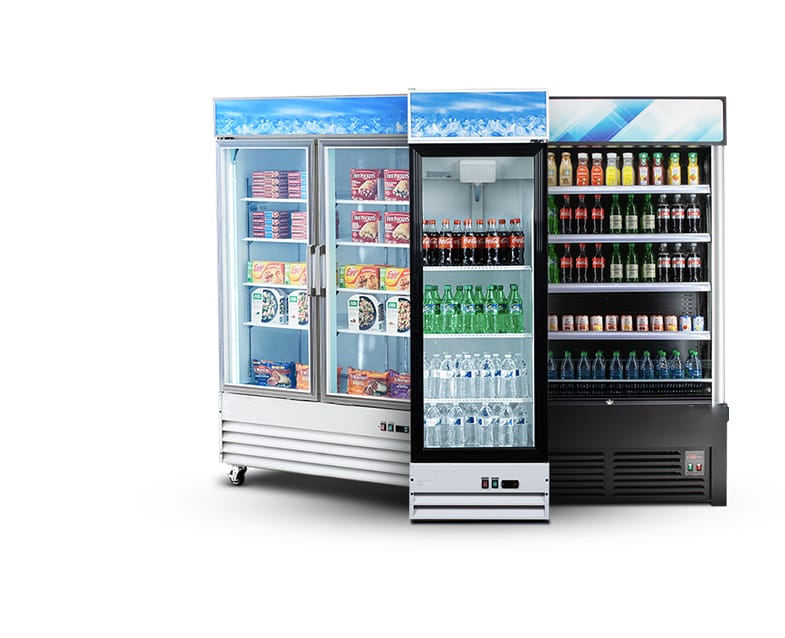
Beverage Cooler Production Line — Cost, Payback & Turnkey Setup (2026 Pillar Guide)
Investment tiers from a single-door entry line to a full bottler-program build, the payback math behind a 3,000-unit/day line, and the complete equipment list and certification checklist a beverage cooler OEM needs to go from contract to first shipment.
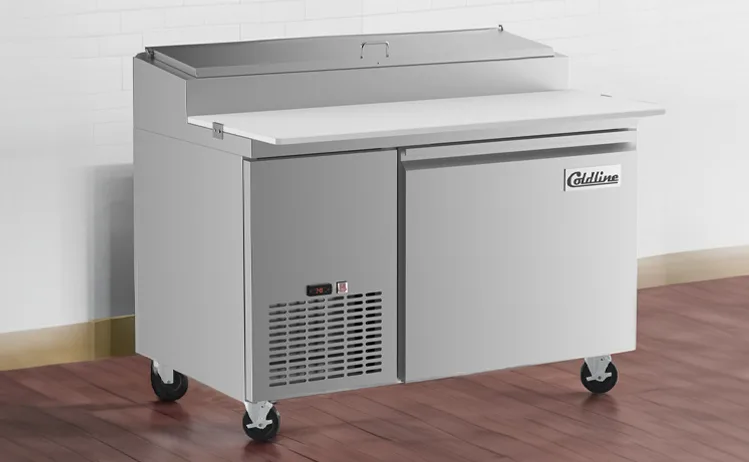
Chef Base Production Line: Cost, Break-Even & Turnkey Manufacturing (2026 Pillar Guide)
Investment tiers, the break-even math behind an 800-unit/day line, and the full equipment list and certification checklist a foodservice OEM needs to start chef base and refrigerated-counter production.
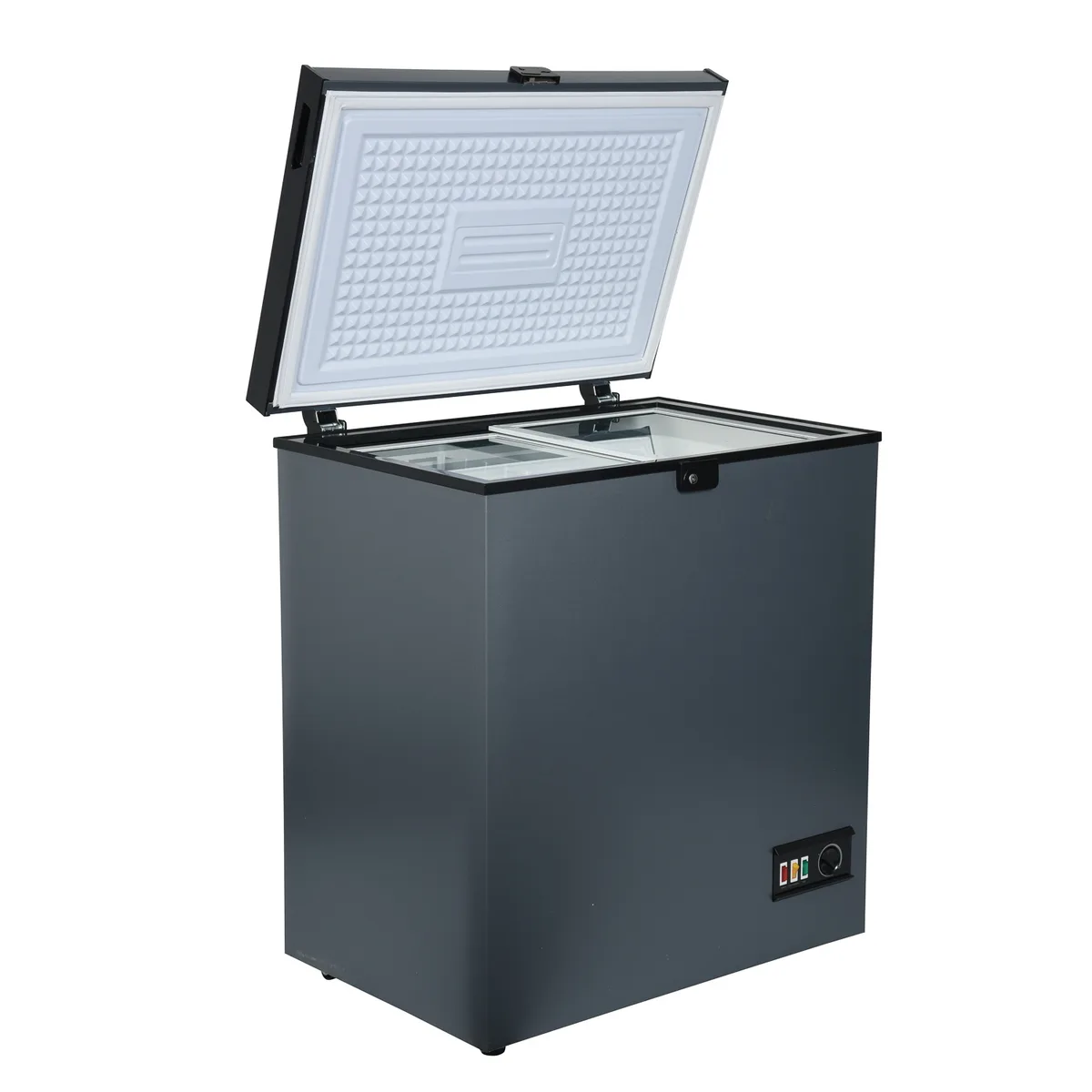
Chest Freezer Production Line — Cost, Capacity & Turnkey Factory Setup (2026 Pillar Guide)
Investment tiers from a 300-unit/day entry line to a 3,000-unit/day ultra-low-temperature build, the ATEX and Ecodesign pitfalls that stall first-time freezer OEMs, and the complete equipment list, mould selection logic and staffing plan needed to go from contract to first accepted cabinet.