
Ligne de panneaux frigorifiques — EN 14509 compliance-certified lignes de production by UREXCEED, manufactured under an ISO 9001-certified quality management system. Lead time 120 – 150 days, MOQ 1 line.
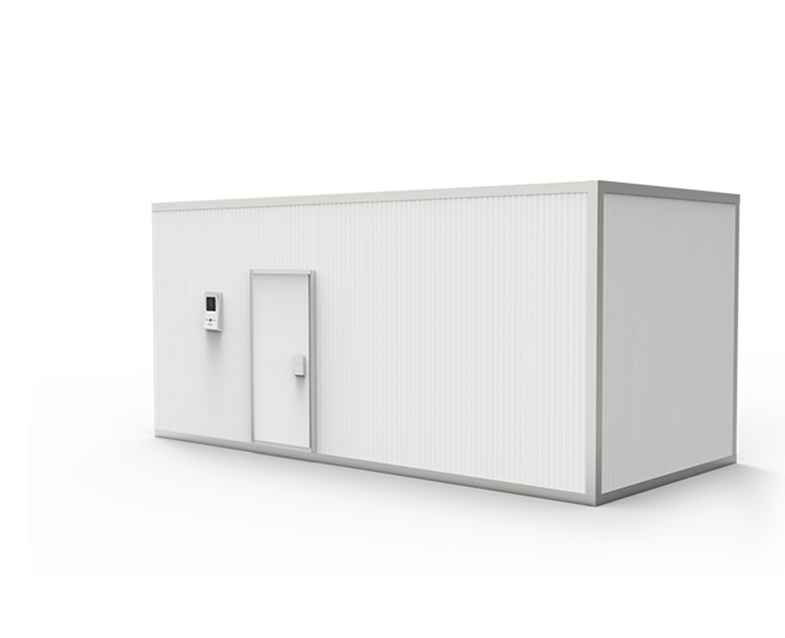
Ligne de panneaux frigorifiques
Ligne continue, 10–40 panneaux/h, 50–200 mm
Engineering reply within 24 hours
Quote + spec sheet + tailored sizing recommendation. WhatsApp answered 9 am–6 pm Beijing time.
Inside the line — three components we ship to you
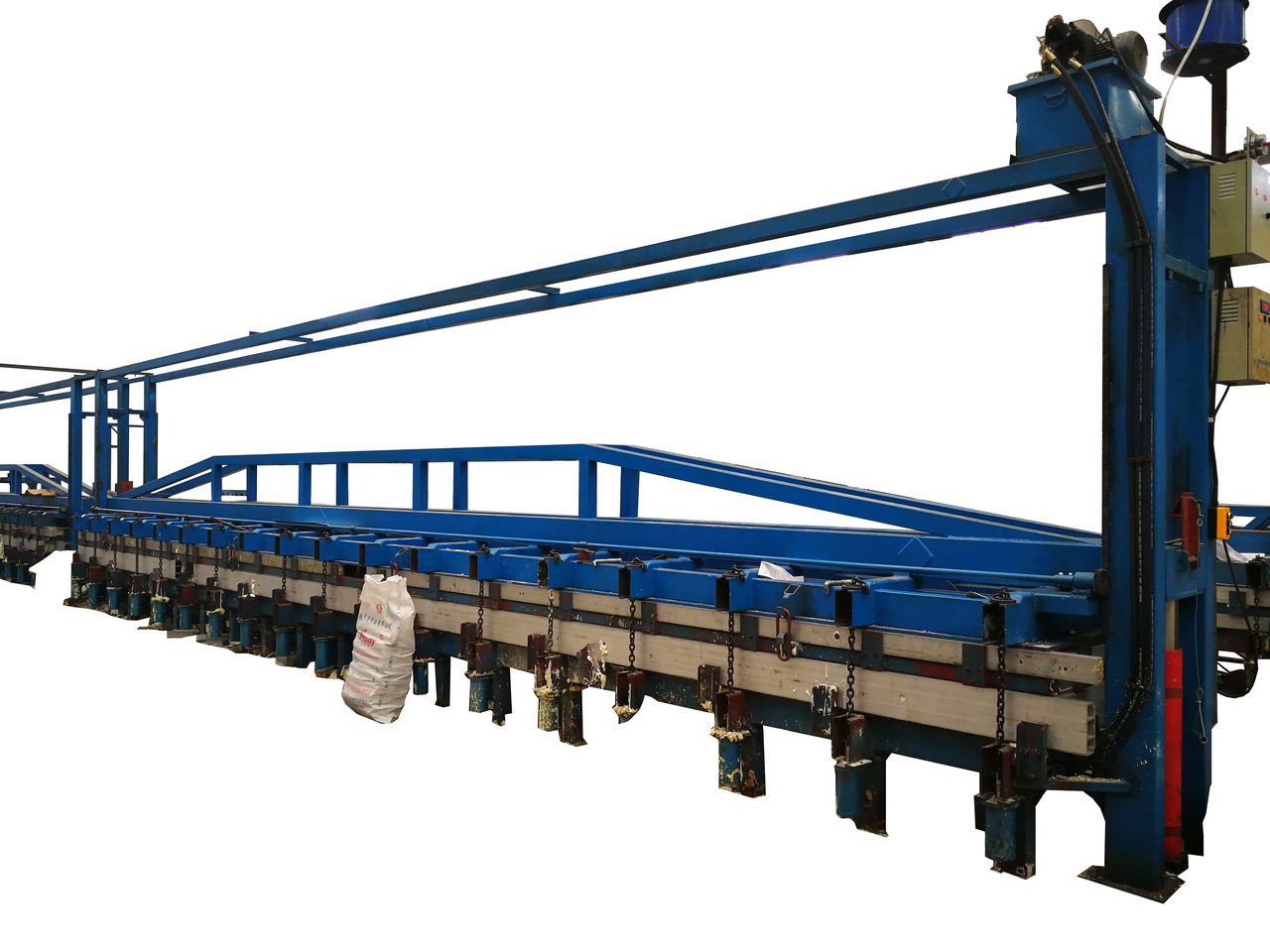
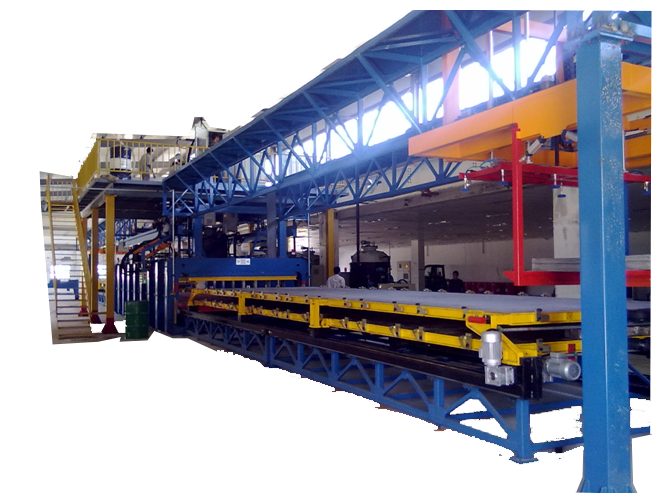
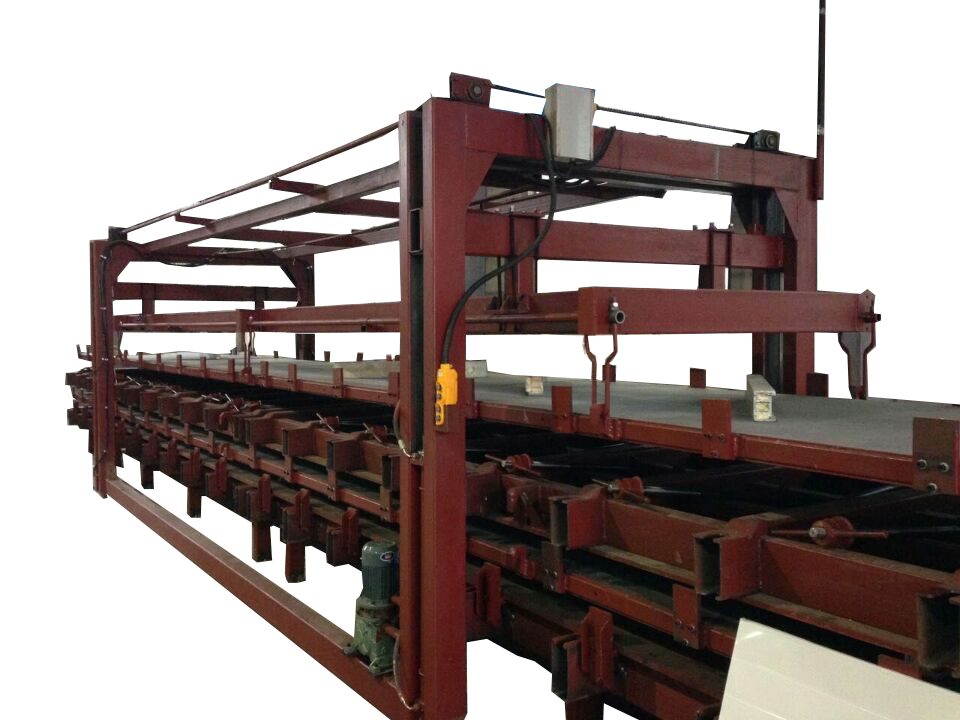
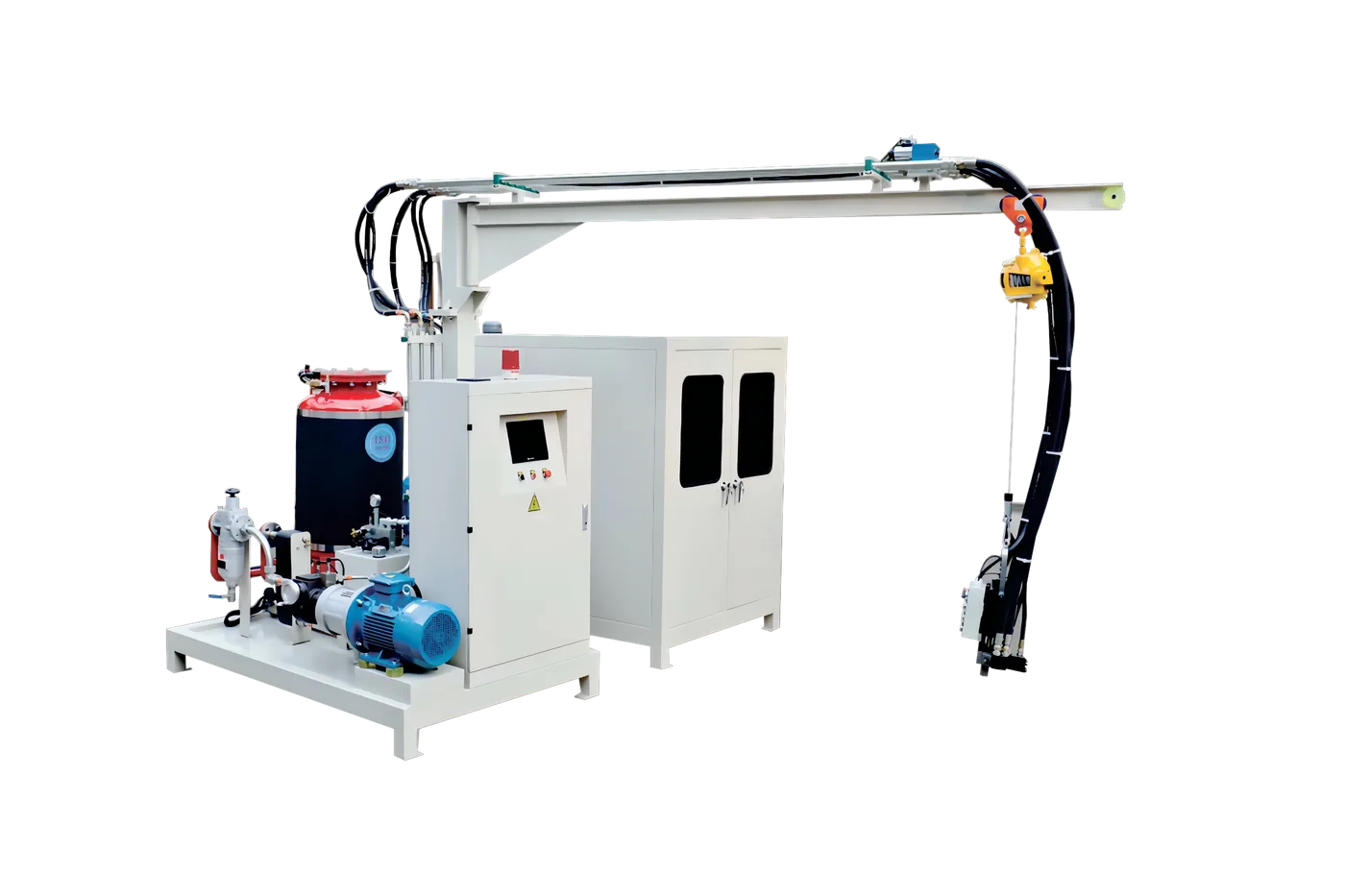
A discontinuous cold-room panel line is built from three core components. Each photograph below is the actual equipment we ship. Architecture is intentionally simple: one horizontal press body holding the panel between heated platens, a high-pressure PU foaming machine feeding the cavity, and the steel forming platens that define your panel length (3/6/9/12/18 m) and width (1.2 m fixed).
Intermittent press (the line body)
Welded-steel horizontal book press, 1.2 m × N-metre envelope. Top + bottom heated platens (40–60°C, PID control) clamp the steel-foam-steel sandwich while PU foam cures. Side-mounted hydraulic clamping cylinders distributed along the press length deliver parallel pressure across the full panel area. Single-press footprint ~25 × 7 m. Sized per order — talk to us with your daily-output target.
See production line catalog →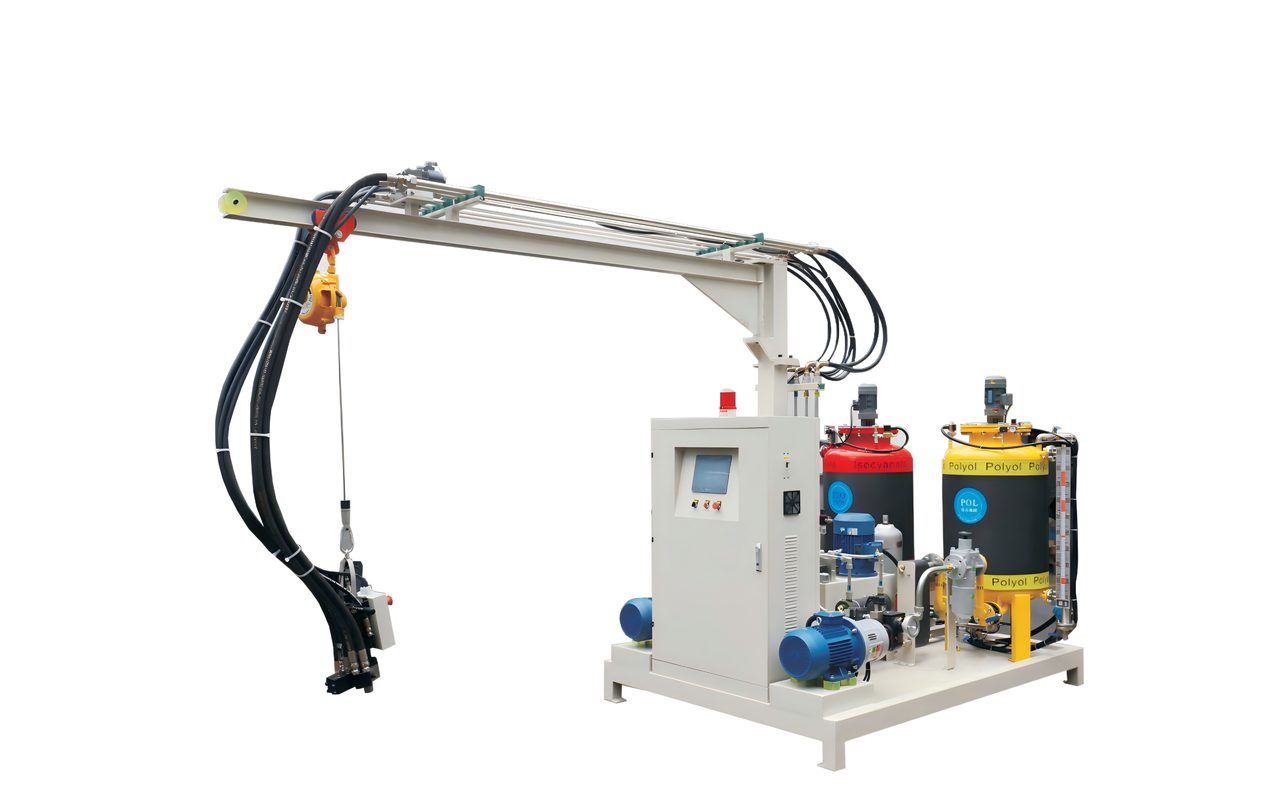
High-pressure PU foaming machine
High-pressure PU machine (200–600 g/s) feeds the press cavity through a positionable injection arm. POL + Cyclopentane + ISO metering with closed-loop pressure control. ATEX Zone 1 cyclopentane-ready as standard; HFO-1233zd(E) configuration available for EU 2025+ markets. Recipe calibrated to your panel thickness and target k-factor (0.022 W/m·K typical).
See PU foaming machines → Steel forming platens (panel-length defining)
Hot-rolled steel platens — 1.2 m wide × 3 / 6 / 9 / 12 / 18 m long. Internal heating channels matched to PID temperature loop. Surface ground flat to ±0.2 mm for parallel pressure transfer. Five standard mould sets cover ~95% of cold-room markets; non-standard lengths (4.5 / 7.5 / 15 m etc.) achievable as custom (4–6 week tooling lead time).
See cold-room panel reference →Spécifications
- Line Type
- Discontinuous (intermittent press) PU sandwich panel production line — steel / PU foam / steel
- Panel Width
- 1.2 m — fixed industry standard (matches EN 14509 sampling width)
- Panel Length (5 standard sizes)
- 3 m / 6 m / 9 m / 12 m / 18 m — sized to your target export market and container loading
- Panel Thickness
- 50 / 75 / 100 / 150 / 200 mm (up to 250 mm available — discontinuous can do thicker walls than continuous)
- Press Cycle Time
- 4 – 8 min per panel depending on thickness
- Daily Output
- 200 – 500 m² per shift (single press); scales with press count and panel-length mix
- Steel Facing Thickness
- 0.4 – 0.8 mm galvanized (Z140/Z275) / pre-painted (PE, PVDF, polyester) / stainless (304/316L)
- Edge Profile Options
- Tongue-and-groove · cam-lock (for flat-pack modular cold rooms) · flat-edge
- Foam Density
- 38 – 42 kg/m³ (cold-room class, closed-cell content ≥92%)
- k-Factor
- 0.022 – 0.024 W/m·K at 50 mm panel thickness
- Foaming Material
- POL + Cyclopentane + ISO (preferred, GWP=25) · HFO-1233zd(E) for EU 2025+ markets · we configure to your destination
- Press Heating
- Heated platen, 40 – 60°C, PID temperature control
- Standards Compliance
- EN 14509 (EU CE marking) · ASTM E72 (US) · GB/T 23932 (China)
- Automation Level
- Semi-automatic intermittent press (operator-paced cycle; coil-feed + cut-to-length optional add-ons)
- Operators per Shift
- 4 – 6 (1 coil prep + 2 press + 1 unloading + 1 packing + 1 QC)
- Factory Footprint
- ~250 – 400 m² per press (25 × 7 m envelope + raw-material area)
- Power Requirement
- 380V · 50Hz · 40 – 90 kW total per press
- Lead Time
- 90 – 120 days
- MOQ
- 1 line (single press + matched PU foaming machine + first PU raw-material lot)
Applications
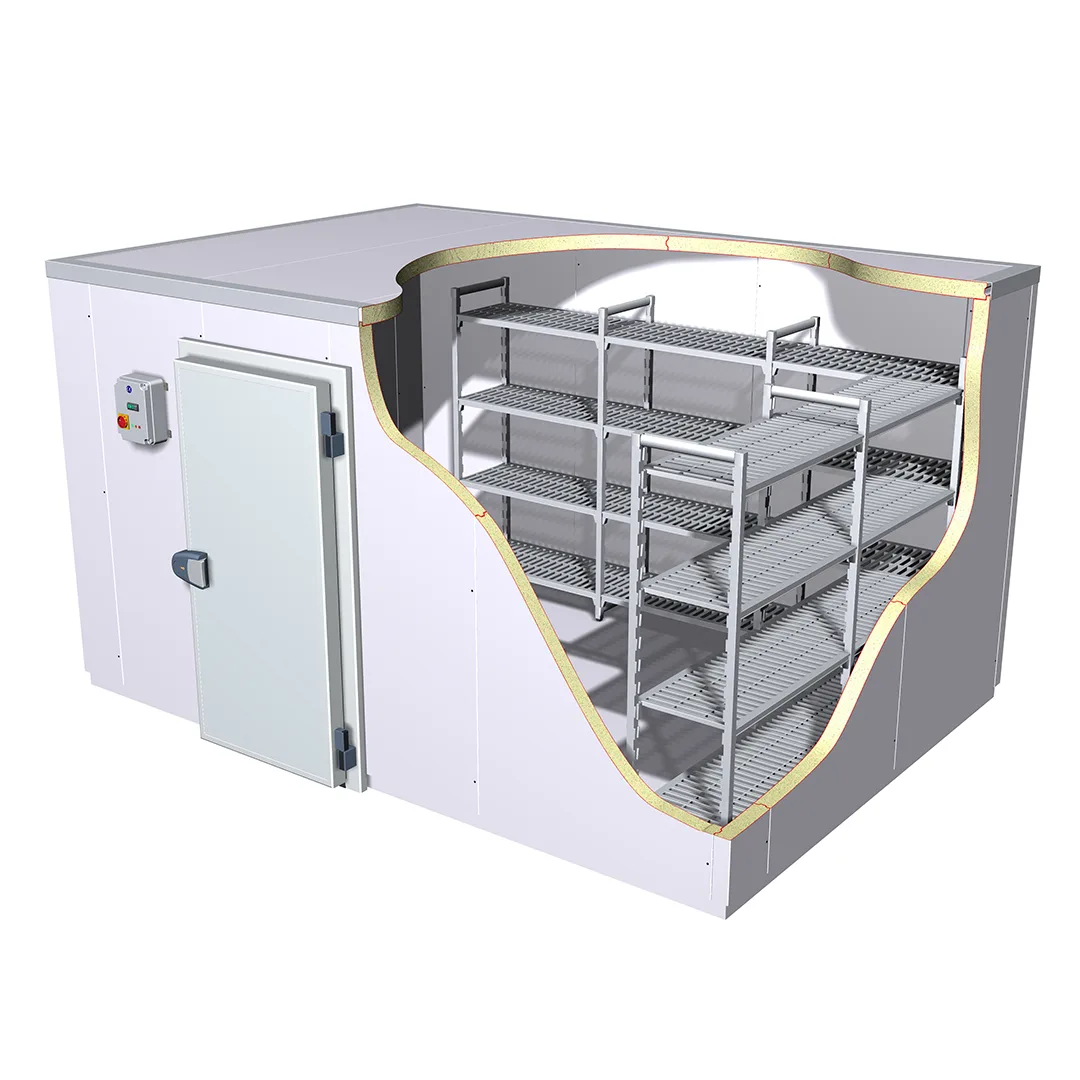
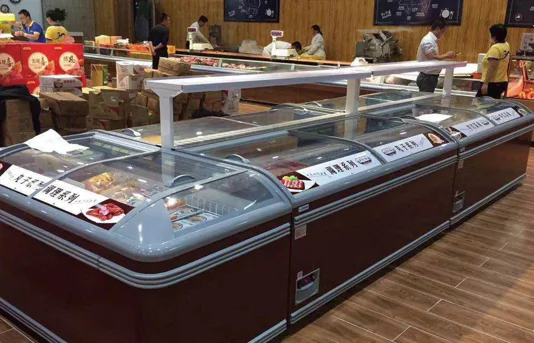
- Modular cold rooms (flat-packed, camlock edge, exported to MENA / Africa / SE Asia / LATAM)
- Commercial cold storage rooms (walk-in coolers + freezers for supermarkets, restaurants, hotels)
- Industrial freezer rooms (food processing, ice cream, seafood blast freezer to -40°C)
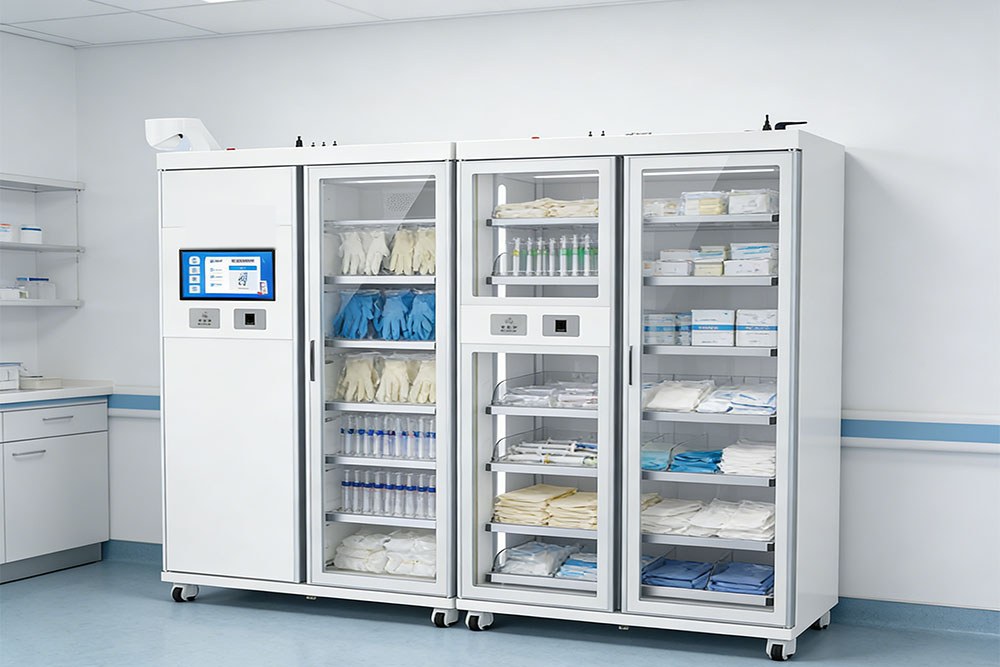
- Pharmaceutical cold storage (vaccine, biological samples, regulated drugs — often stainless 304 inner facing)
- Refrigerated truck body and reefer container insulation panels
- Specialty thickness panels (200–250 mm walls — discontinuous press handles thicker than continuous)
For factory owners planning to build a discontinuous cold-room panel plant. For factory owners planning to build a discontinuous cold-room panel plant. We ship the intermittent press + matched PU foaming machine + first PU recipe + commissioning. Continuous double-belt lines are NOT our scope (those come from European OEMs at 3–5× the capex).
Is this line for you?
A discontinuous panel line is a specific architecture choice. Below: who wins with it, and who should buy something else.
Yes — This Line Fits You If:
- You're building a NEW cold-room panel plant targeting modular cold rooms, commercial cold storage, blast freezer, or specialty thickness panels
- Your target monthly output is 4,000–12,000 m² (single-shift 200–500 m² per press; 2 presses + 2 shifts = up to 22,000 m²/month)
- Your destination markets are MENA / Africa / Southeast Asia / Latin America — markets that prefer flat-packed camlock panels and modular cold-room kits
- You need flexibility: 5 standard panel lengths (3/6/9/12/18 m), 50–250 mm thickness range, multiple edge profiles, multiple steel facings
- You're cash-flow sensitive: capex USD 400K–900K is reachable; USD 2M+ for a continuous double-belt line is not (yet)
No — Buy Something Else If:
- Your target monthly output is > 15,000 m² of one standard white wall panel — that's continuous double-belt territory (Hennecke / KraussMaffei in Europe). We can refer you, but it's not what we ship.
- You want highly automated, single-operator continuous production — discontinuous press is operator-paced (4–6 people per shift)
- You only need 1–2 panels for a project (you're a contractor, not a factory) — buy finished panels from a manufacturer; don't build a line
Cold Storage Panel Machine vs. Full Production Line — Same Equipment, Different Names
Buyers search this equipment under several names — "cold storage panel machine," "cold room panel machine," "PU sandwich panel machine," and "cold room panel production line." All of them describe the discontinuous intermittent-press system on this page. "Machine" usually refers to the press itself, or the press paired with its PU foaming unit; "line" or "production line" is the complete engineered system — press, PU foaming machine, steel forming platens, and a calibrated first recipe — that we quote and ship as one order.
We do not sell the press as a standalone machine. A press alone cannot produce a certified panel without a matched PU foaming machine and a foam recipe tuned to your steel facings and target k-factor — so every order ships as a complete line, commissioned together.
Discontinuous (intermittent press) vs continuous (double-belt) — an honest comparison
Two architectures dominate cold-room panel production. They serve different factory profiles. Here's a fair side-by-side so you can verify discontinuous is right for you — not just believe what we tell you.
| Aspect | Discontinuous press (our scope) | Continuous double-belt (we don't ship this) |
|---|---|---|
| Monthly output (1 press × 2 shifts × 22 days) | 4,000 – 12,000 m²/month | 15,000 – 60,000 m²/month |
| Panel length flexibility | 5 fixed standard lengths (3/6/9/12/18 m) — match your container loading + market | Continuous saw-cut 2–14 m — flexible but wasteful for short panels |
| Panel thickness range | 50 – 250 mm (handles thicker walls than continuous) | 50 – 200 mm typical max |
| Best-fit panel type | Modular cold-room camlock panels · super-thick blast-freezer walls · stainless inner-skin pharma panels · specialty thickness | Standard white wall + roof panels in large volume |
| Capex (line + press + PU foaming + jigs) | USD 400K – 900K | USD 1.8M – 3.5M |
| Factory footprint per line | ~25 × 7 m per press (250–400 m² total) | 80–150 m long press hall (600–1,200 m²) |
| SKU / thickness changeover | 5 min (swap mould stack) | 30 min (adjust press gap + side rails) |
| Right buyer profile | First-time panel plant · modular cold-room exporter · specialty thickness · cash-flow sensitive | Volume white-panel commodity supplier · already has continuous experience |
Continuous lines we don't ship. If your target market is large-scale standard white panels at 30,000+ m²/month, talk to European continuous-line vendors. For modular cold rooms, specialty thickness, and most factories targeting MENA / Africa / SE Asia / LATAM exports — discontinuous wins on capex, flexibility, and container-loading economics.
1.2 m × 5 standard panel lengths — sized for export container loading
Discontinuous press = mould-defined length. We ship five standard moulds: 3 / 6 / 9 / 12 / 18 m. Width is fixed at 1.2 m — the industry standard that matches EN 14509 sampling width and most cold-room module spans. Pick which length(s) match your target market and container loading economics.
| Panel length | Target market / typical use | Single-panel area | Container load efficiency |
|---|---|---|---|
| 3 m | Small-format walk-in coolers · LATAM / Africa modular cold rooms (4 × 3 × 2.5 m room kits) | 3.6 m² | 40' HC: ~600 panels |
| 6 m | Standard cold-storage rooms (6 × 4 m halls) · SE Asia / MENA modular kits · reefer container inner-lining | 7.2 m² | 40' HC: ~280 panels |
| 9 m | Mid-size cold-storage warehouses (4–6 m ceiling height) · food-processing back-rooms | 10.8 m² | 40' HC: ~180 panels |
| 12 m | Industrial cold-storage walls + roof spans (single-panel full wall, no horizontal joint) | 14.4 m² | 40' HC: ~130 panels |
| 18 m | Large food-processing plants · long-span roof panels (un-supported) · multi-temp logistics warehouses | 21.6 m² | 40' Open-Top: ~85 panels |
Width 1.2 m is industry standard — matches EN 14509 sample width, fits most cold-room wall modules. Non-standard lengths (4 / 7.5 / 15 m etc.) are achievable but require a custom mould (4–6 week lead time, USD 30K–60K per mould).
Sizing guide — daily output target → line configuration + capex estimate
Tell us your target daily output and primary panel-length mix; we co-spec the press count, PU machine size, layout, operator headcount and capex. Below: three reference tiers using market-average pricing — your actual quote depends on PU chemistry, steel coil prep, automation level, and destination market certifications.
| Target daily output | Monthly equivalent (22 working days) | Press configuration | PU foaming machine | Operators per shift | Footprint | Capex estimate (market average) |
|---|---|---|---|---|---|---|
| 200 m²/shift | ~4,400 m²/month | Single 6 m press | Low-pressure PU machine (200 kg/h) | 4 people | ~250 m² | USD 450K |
| 350 m²/shift | ~7,700 m²/month | Single 6 + 9 m mould stack on one press | High-pressure PU machine (400 kg/h) | 5 people | ~320 m² | USD 625K |
| 500 m²/shift | ~11,000 m²/month | Single 6 / 9 / 12 m mould stack on one press, or 2 presses for SKU mix | High-pressure PU machine (600 kg/h) | 6 people | ~400 m² | USD 825K |
Capex above is market-average for a complete press + PU foaming machine + first mould set. Add ~USD 60K per additional standard-length mould; add ~USD 30K for the cut-to-length saw add-on; add ~USD 80K for the coil-feed + profiling pre-station if you want to roll your own steel facings. Final number lands on the engineering call.
What's inside a cold-room sandwich panel
A cold-room panel is steel skin + PU foam core + steel skin. The bond between steel and foam decides whether the panel passes EN 14509 / ASTM E72 testing and whether your cold room is still airtight 20 years later.
Outer steel facing: 0.4–0.8 mm galvanized (Z140/Z275), pre-painted (PE / PVDF / polyester topcoat in white / gray / blue), or stainless (304 / 316L for food-grade or coastal markets).
PU foam core: 50–250 mm rigid PU foam, density 38–42 kg/m³, k-factor 0.022 W/m·K, closed-cell content ≥92%. Foamed in-situ in the press. 20–30 year design life.
Inner steel facing: same materials as outer. Often 0.4–0.5 mm food-contact pre-painted polyester for cold rooms; stainless 304 for pharma / food-processing where cleanability matters.
Edge profile (your buyer's choice): tongue-and-groove (most common, gravity self-seal) · cam-lock (mechanical lock for modular cold rooms, flat-pack export) · flat-edge (for factory-welded big-room panels). All three are supported on our line.
Steel-to-foam bond: PU foams directly to clean galvanized / painted steel. For stainless or special coatings, a two-component PU adhesive primer is applied before pressing (see our adhesive dispenser catalog).
EN 14509 compliance — what passes, what fails, what it costs
EN 14509 is the European harmonized standard for self-supporting double-skin metal-faced insulating panels. CE marking under EN 14509 is mandatory for selling cold-room panels into any EU country. Below: what the standard tests + the typical numbers a well-built discontinuous panel hits.
Bond strength (steel-to-foam tensile pull-off): EN 14509 requires ≥0.1 MPa. Typical discontinuous panel achieves 0.12–0.18 MPa.
Bending strength: 3-point bending test on full panel, span 3 m. Panels rated for floor / wall / roof load by deflection vs load curve.
Reaction to fire: EN 13501-1 classification. PU panels typically B-s2,d0 (B with low smoke, no droplets) or B-s1,d0 with flame retardant additives.
Thermal conductivity: EN 12667 hot-plate test. k-factor measured at mean temperature 10°C. Must match declared value (typically 0.022 W/m·K).
Water absorption: 28-day soak test. Foam volume increase must be < 3% (cold-room PU achieves 1.5–2.5%).
Fastener pull-out: self-drilling screw + nut test simulating site installation. Pull-out resistance ≥1.5 kN. Camlock-edge panels meet this directly.
Full EN 14509 certification testing at TÜV / Bureau Veritas / Intertek runs USD 30K–60K and 8–12 weeks. ASTM E72 (US) and GB/T 23932 (China) are equivalent regional standards. We supply the panel — you submit it to your chosen lab.
Five cold-room panel end-markets — pick which one(s) your factory serves
Cold-room panels go into 5 distinct end-markets, each with its own thickness, coating, and certification requirements. Discontinuous press is strongest in 1, 2, and 3 below.
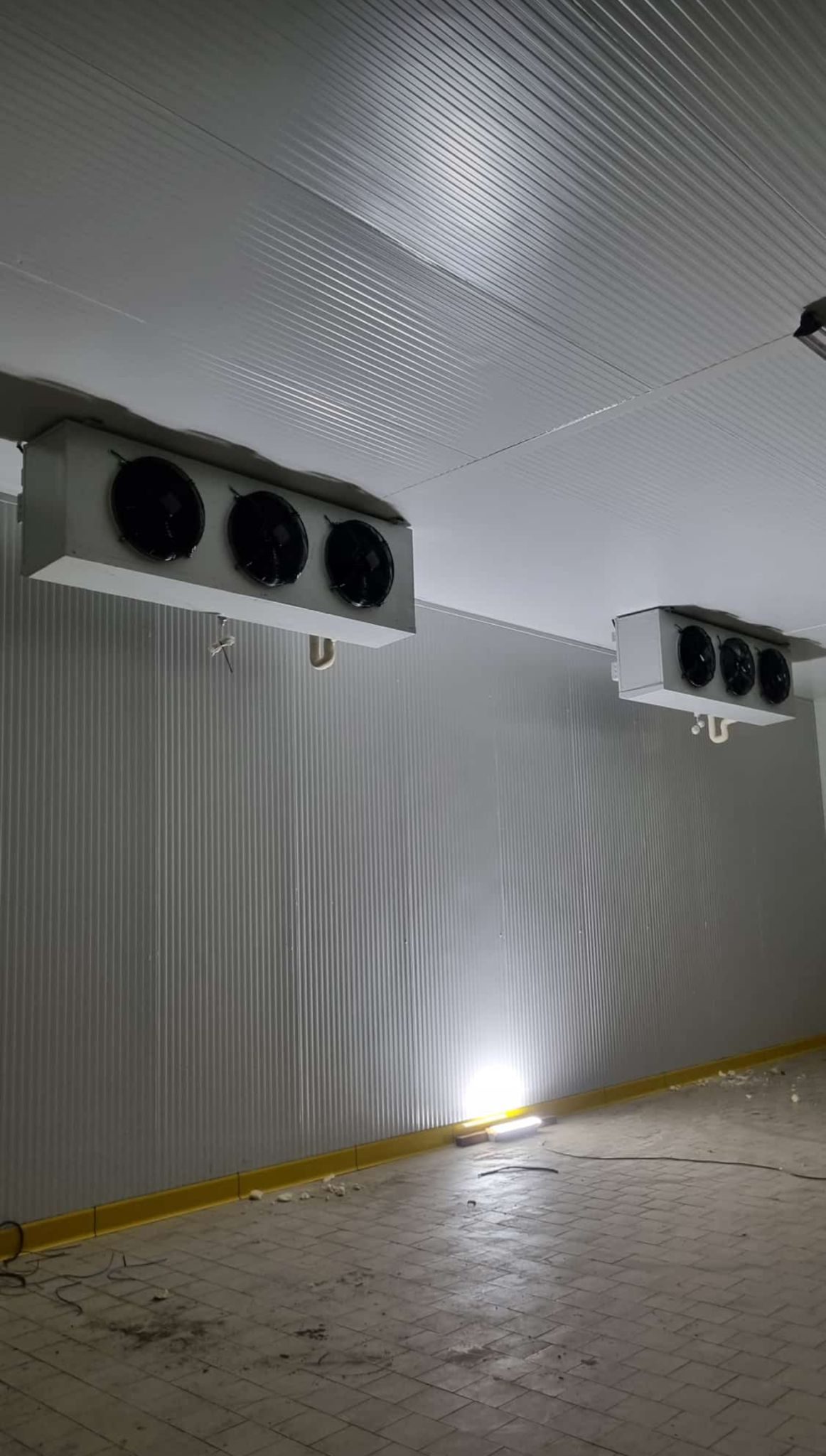
Modular cold rooms (flat-packed, camlock edge, exported to MENA / Africa / Southeast Asia / Latin America): 100 mm panels with cam-lock edge profile. On-site assembly by local installers. ~10% of global panel market by volume but the FASTEST GROWING segment — discontinuous press is the right tool here.
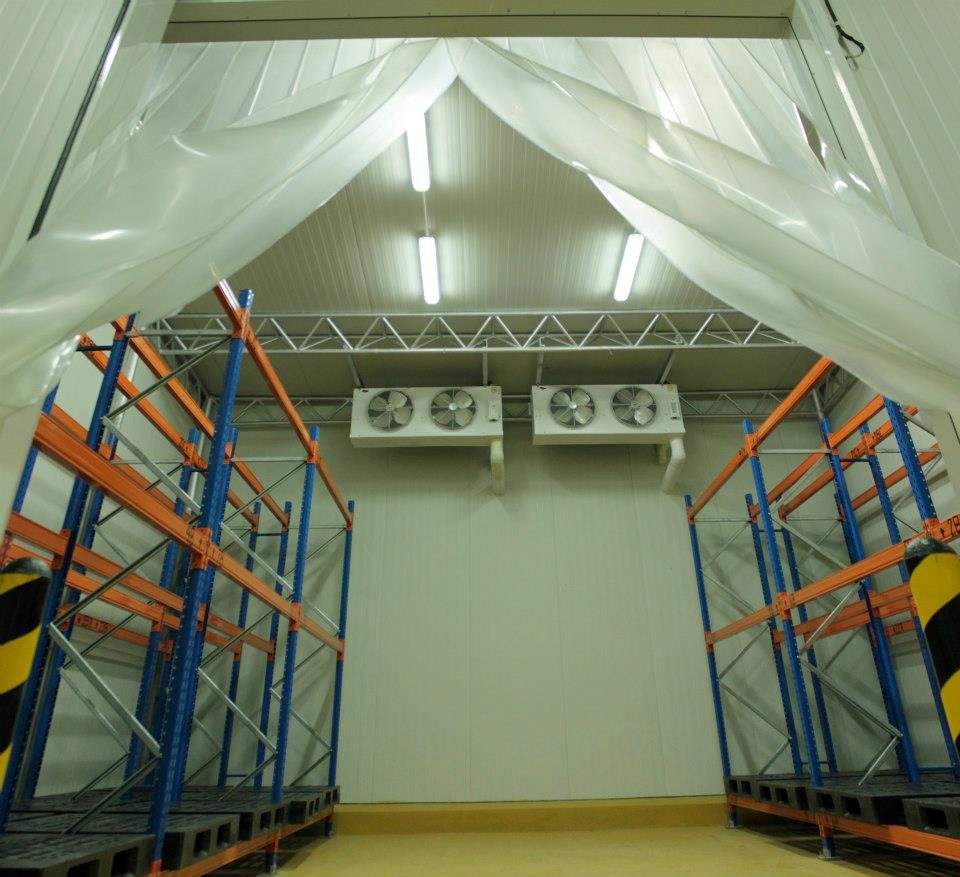
Commercial cold storage: walk-in coolers + freezers for supermarkets, restaurants, hotels. Standard 100 mm (cooler) and 150 mm (freezer) panels. Pre-painted white steel facings. ~40% of cold-room panel market by volume.
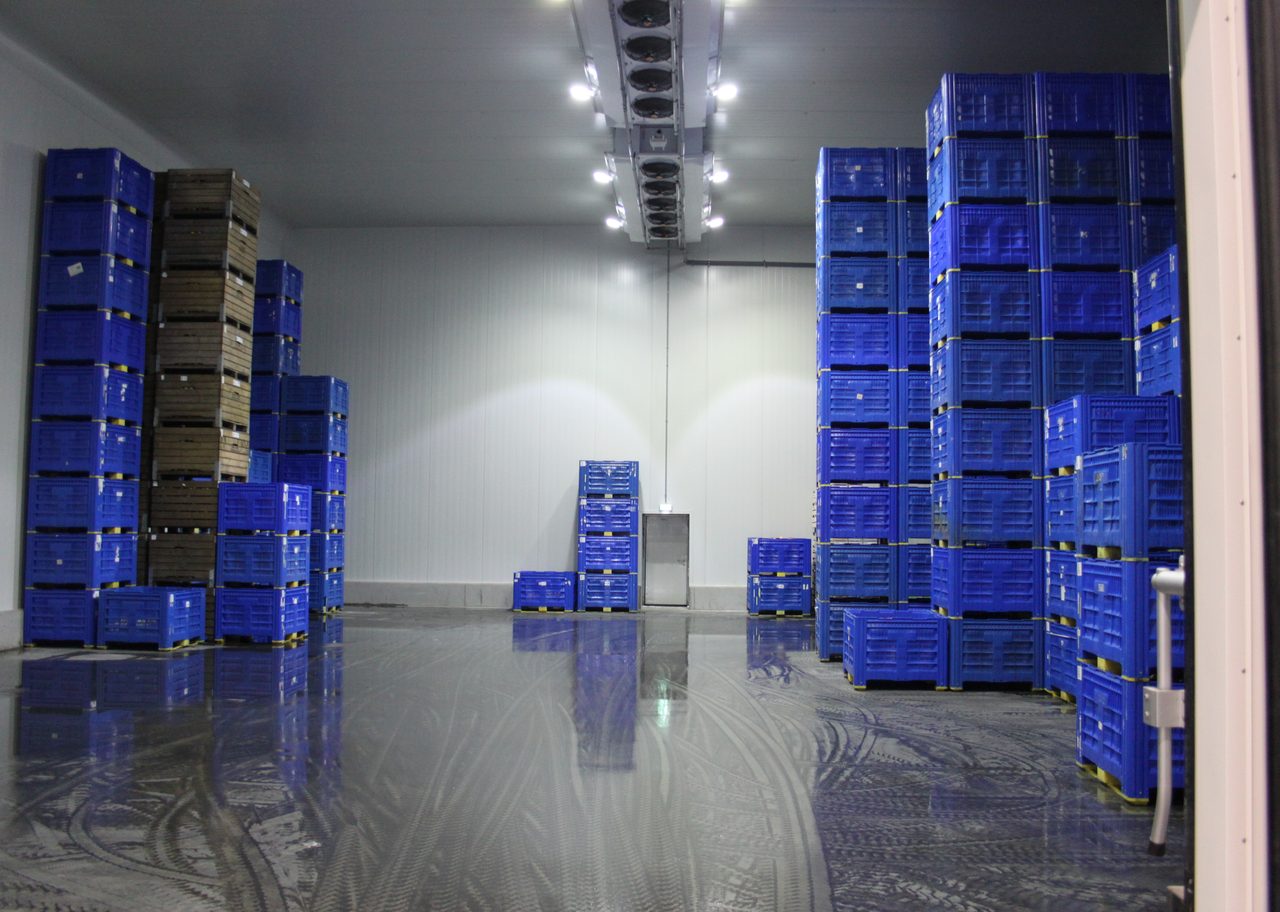
Industrial freezer rooms: food processing plants (ice cream, frozen meat, seafood), blast freezer rooms at -30°C to -40°C. 150–200 mm panels (sometimes 250 mm — only discontinuous handles this). ~25% of market.
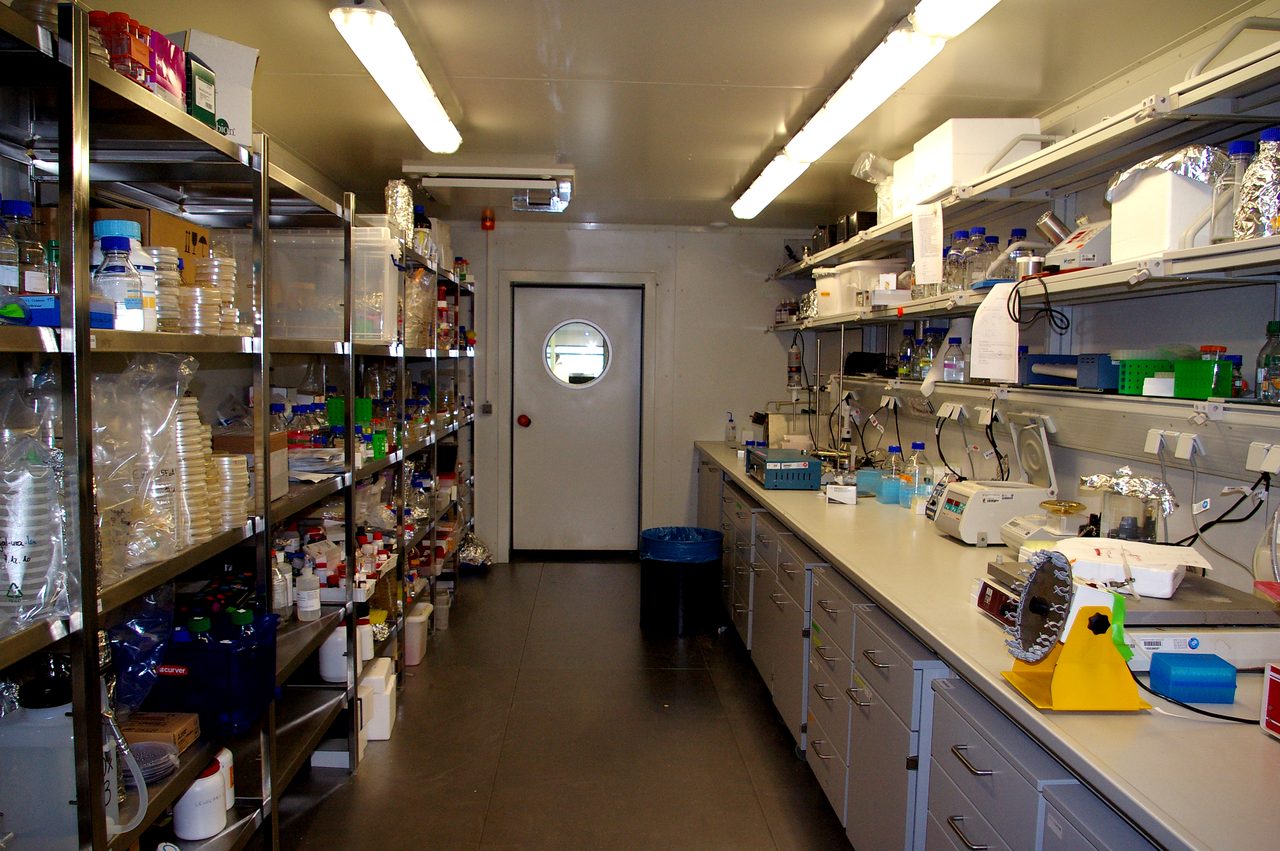
Pharmaceutical cold storage: regulated drugs, vaccines, biological samples. Often 100–150 mm panels with stainless 304 inner facing (cleanability + corrosion). Sometimes GMP-validated. ~15% of market, premium pricing.
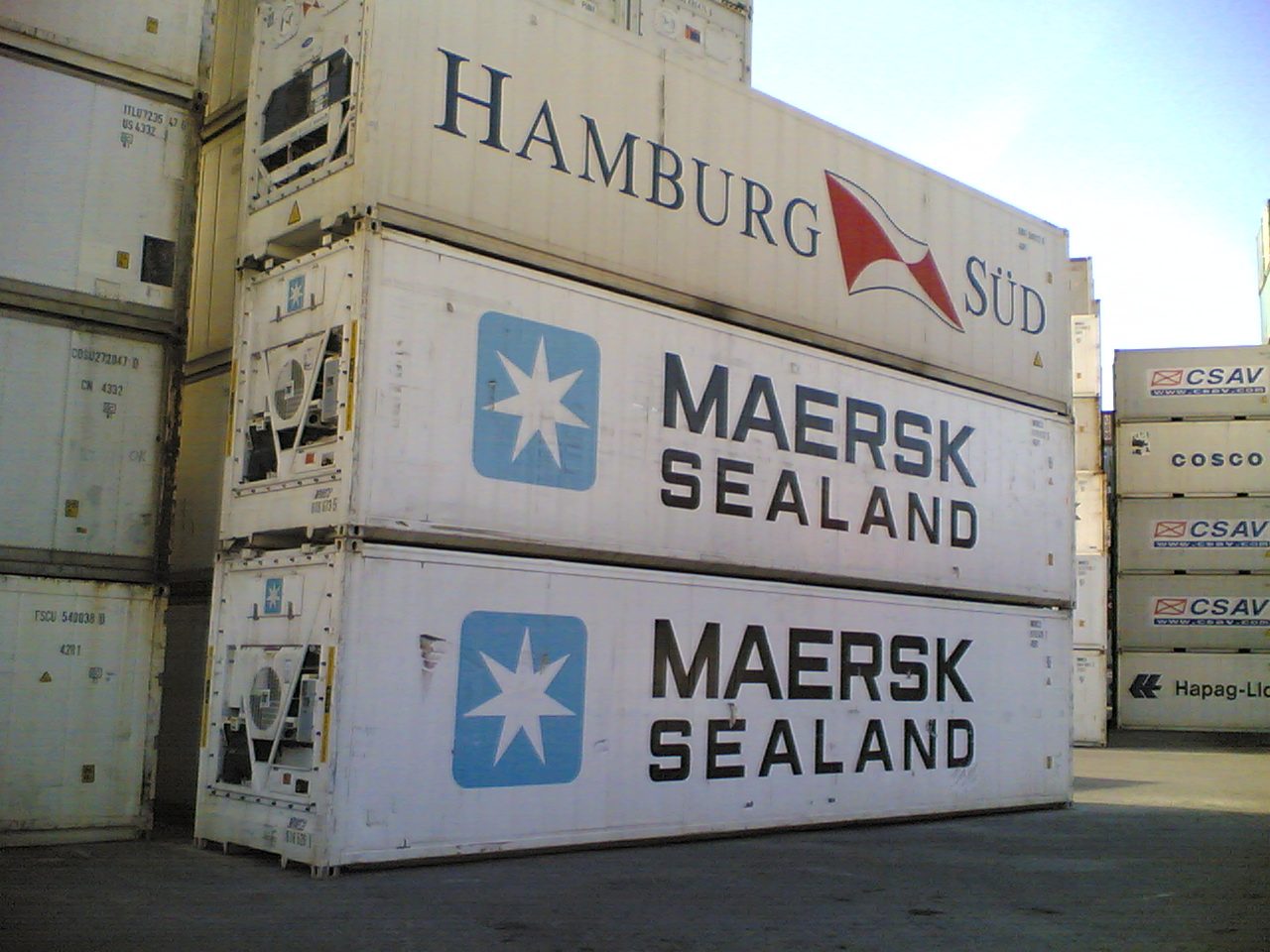
Refrigerated truck body + reefer container insulation: 50–100 mm panels with aluminum / GRP inner facing. Vibration-resistant bond requirements. ~10% of market.
Project timeline + factory infrastructure requirements
A discontinuous panel line ships in 2–3 × 40' containers (vs 6–8 for a continuous line) — that's a third of the sea-freight cost. Total project timeline from PO to first panel: 4–5 months.
- 1
Civil works (Weeks 1–4): Foundation pad with light anti-vibration matting, ≥6 m ceiling clearance, 380V industrial 3-phase power (40–90 kW per press), compressed air supply (≥0.7 MPa), 5-ton overhead crane for mould handling.
- 2
Shipping (Weeks 4–10): The line ships in 2–3 × 40' containers. Plan customs clearance + inland trucking — container count is low enough to land in one delivery window.
- 3
On-site installation (Weeks 10–13): Our engineer team (3–4 people) assembles the press, PU foaming machine, raw-material skid, and first mould set. Calibration of press parallelism, heated platen control, PU pressure / flow.
- 4
Commissioning + first production (Weeks 13–15): First 20 panels for calibration (often scrapped — material cost USD 2K–4K). Iterate press gap, platen temperature, foam recipe until panel passes bond + thickness + density QC.
- 5
Operator training + handover (Weeks 15–17): Train 4–6 of your operators on press operation, PU recipe management, mould changeover, daily maintenance. Hand over QC inspection protocols + spare-parts list. We stay on-site for the first week of full production.
Produits associés
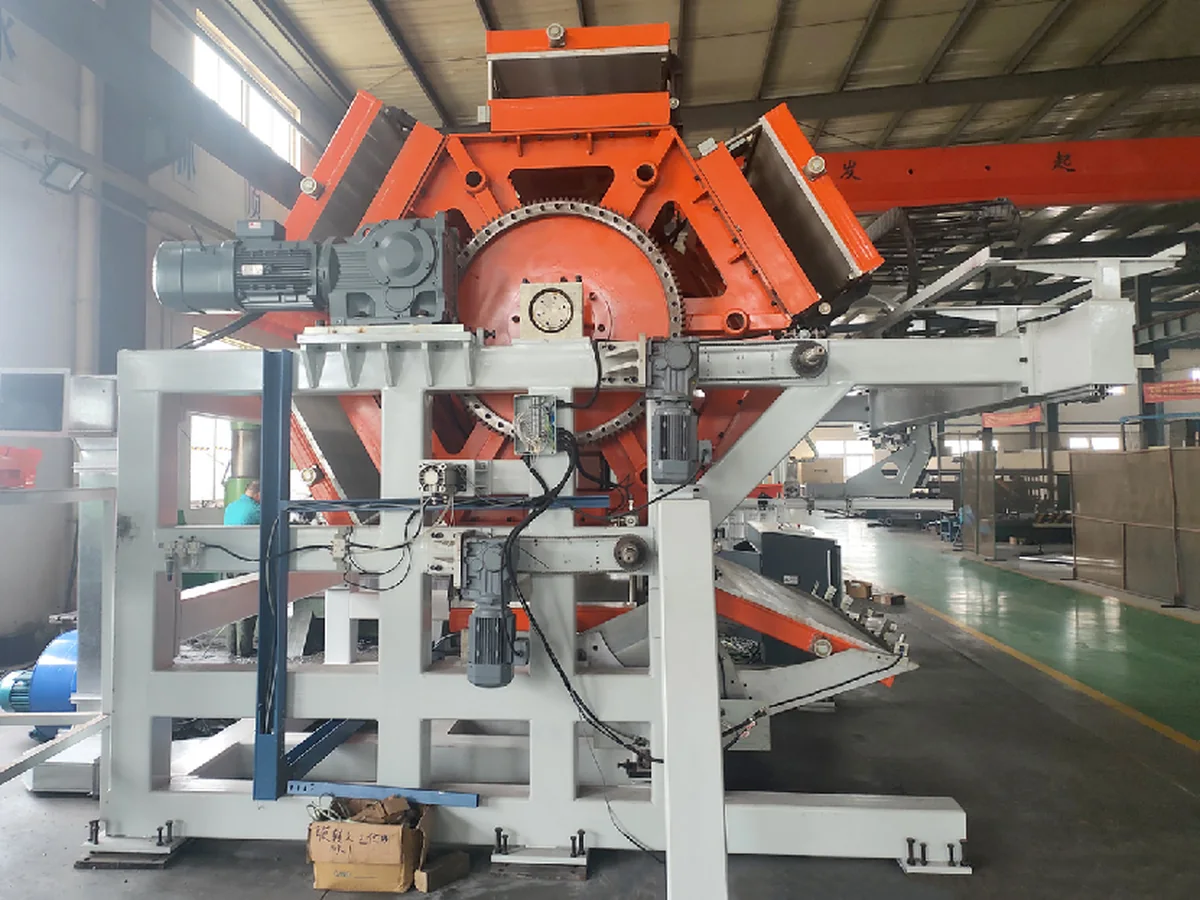
4-Station Hydraulic Air-Curtain Cabinet Foaming Fixture
4-station hydraulic foaming fixture for air-curtain refrigerated display cabinets (open-front merchandisers up to 4 × 1.8 × 0.55 m). Top/bottom flat-pressing clamp, water heating, 50 kW, 80–200 cabinets/shift.
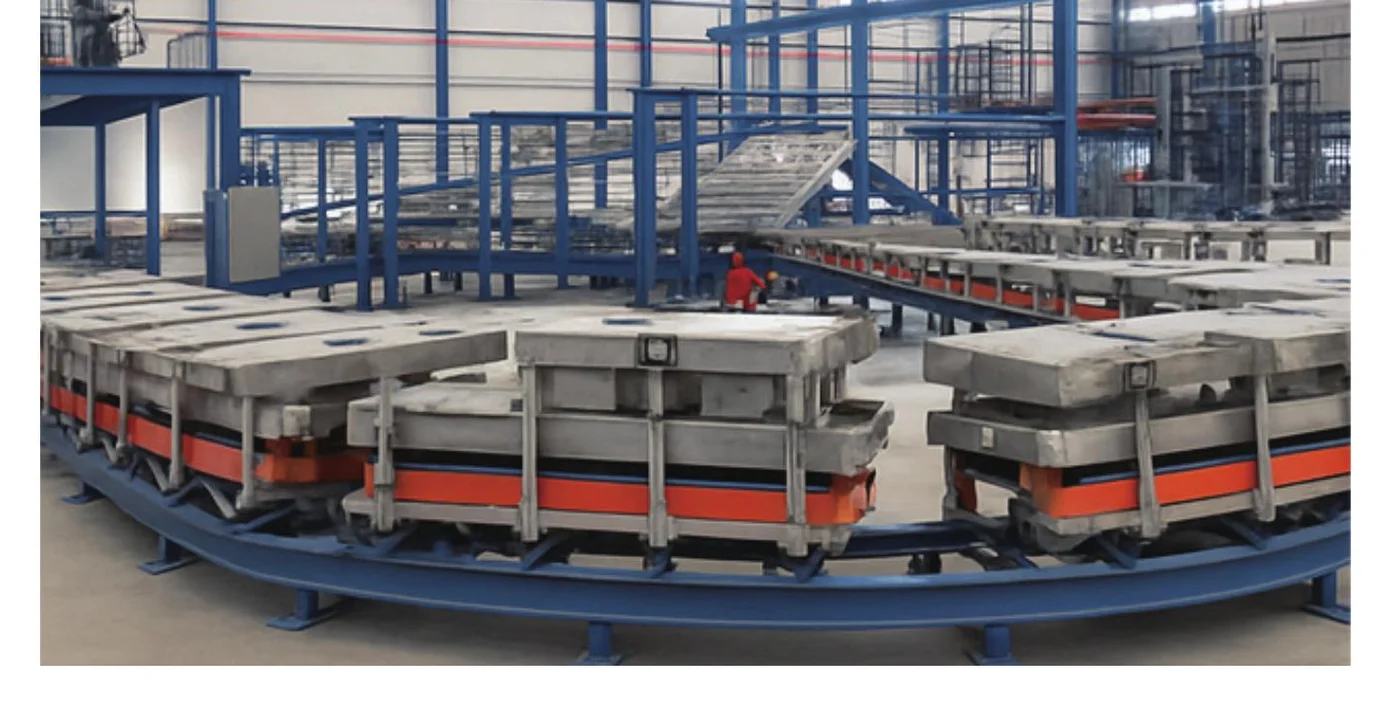
26-Station Ground-Rail PU Foaming Line for Refrigerator Doors — Closed-Loop Track Layout
Closed-loop ground-rail PU foaming line dedicated to refrigerator and cabinet DOOR foaming. 26 single-cavity fixture stations on a continuous steel track, 20-sec takt, ~1,200 doors per 8-hour shift (~2,450/day on two shifts) at 85% line efficiency. 2,000 × 900 mm fixture × 200 mm closing height — sized for door panels. Cyclopentane + ATEX Zone 1, steam or oil heating.
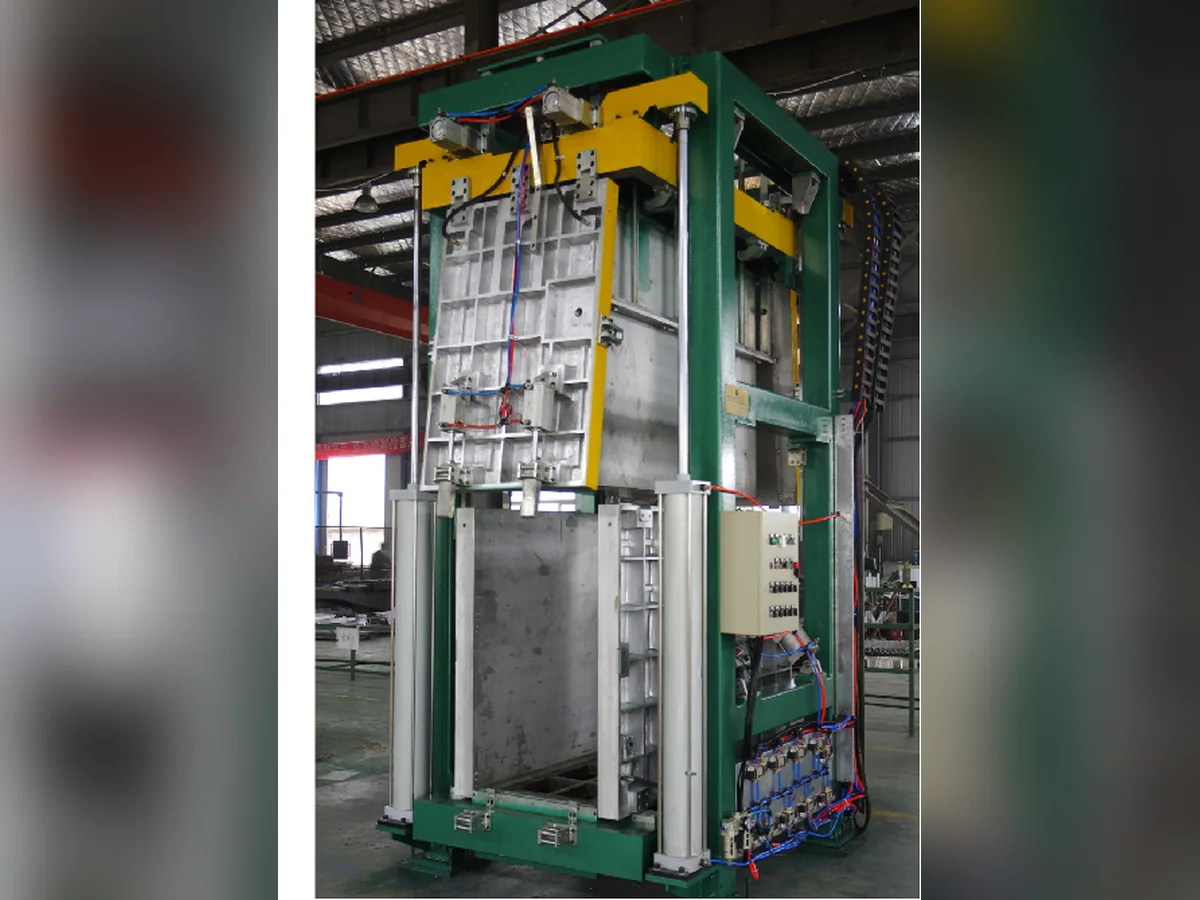
Hydraulic Foaming Press — Specialty / Irregular Cabinets
Standalone hydraulic foaming press for air-curtain, wine cabinet and irregular / non-standard cabinet foaming. Water-heated + air-cooling, 50 kW, 40–120 cabinets/shift. Complements existing line for capacity peaking.
Cross-Sell · One-Partner Synergy
Match Your Production Line With Factory Solutions
Pick the factory type that matches your buyer market — we engineer the complete production line for that vertical.
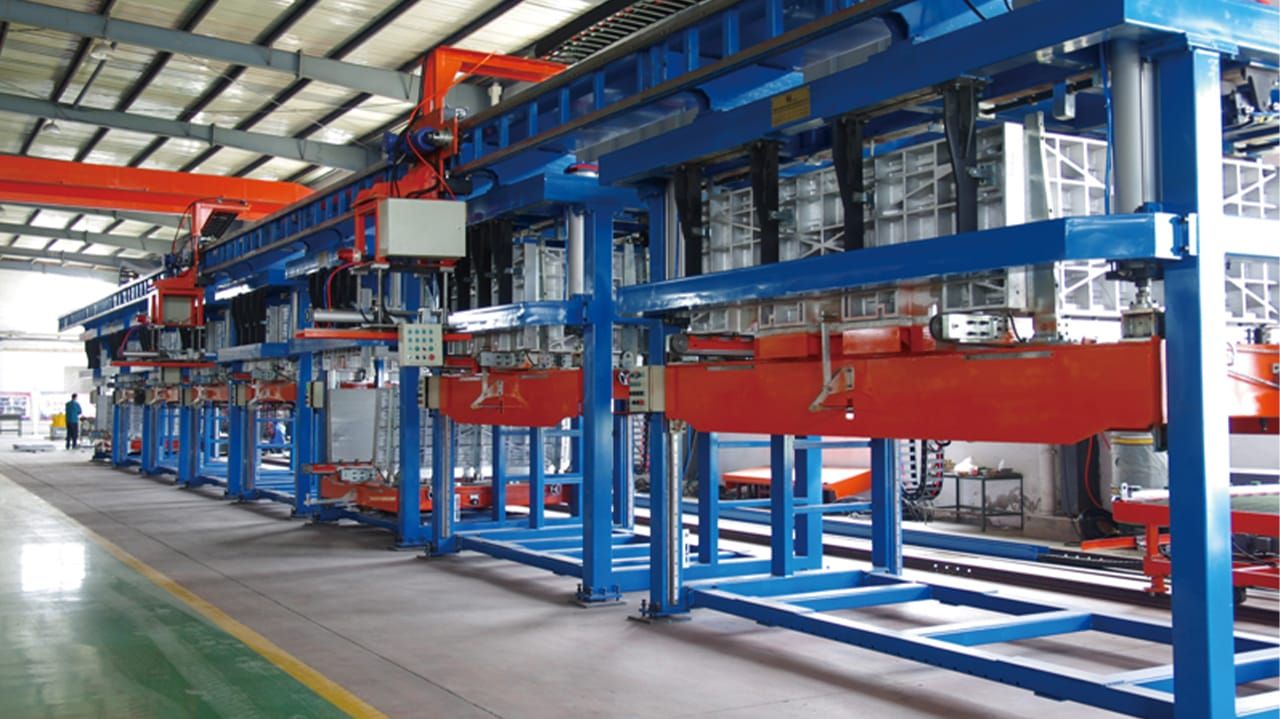
Browse 13 Factory Solutions
Refrigerator / Chef Base / Freezer / Display Cabinet / Commercial Freezer + 8 specialized markets.
Learn morePU Foaming Machines
High-pressure (cyclopentane / 2C / 3C) + low-pressure + spray-foam — pick the foaming line that matches your factory.
Learn more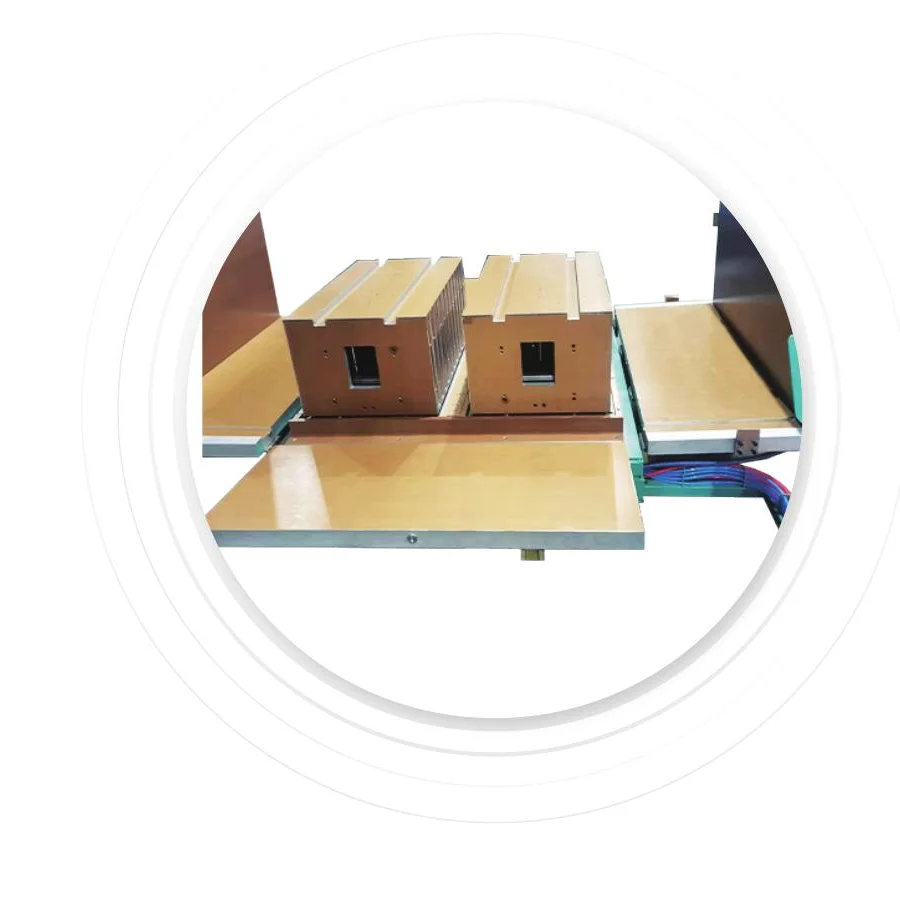
Refrigerator-Grade Moulds
Vacuum-forming + foaming moulds engineered to your cabinet/door geometry. Custom mould design service available.
Learn moreService & Support
Garantie & Service
Intervention sur site disponible dans chaque région où nous avons livré des projets.
On-Site Installation
Our engineers fly to your factory to supervise installation, layout verification, and first-run production.
Commissioning + Tuning
Trial run + parameter tuning to your local raw material, climate, and target product spec — until throughput meets contract.
Operator Training
5-10 day on-site training for production team, QC, and maintenance — bilingual manuals + video tutorials provided.
3-Year Warranty + Spares
Core equipment 3-year warranty, electrical 2-year. Spare parts in stock with global express shipment 24h dispatch.
Questions fréquentes
Should I buy a discontinuous press from you, or a continuous double-belt line from Europe?
Why is panel width fixed at 1.2 m? Can I make wider panels?
Why 5 fixed lengths (3/6/9/12/18 m)? Can you make custom lengths?
What edge profiles do you support? Why is camlock important?
What blowing agent does the foam use? Is it allowed in my market?
What steel facing options do you support? Can I run pre-painted + stainless on the same line?
How many panels per shift, in real numbers? And how many operators?
What's the project timeline and footprint?
Besoin d'une solution complète de réfrigération ?
UREXCEED intègre moules, machines de moussage, lignes de production et matériaux au sein de 6 usines partenaires. Indiquez-nous votre objectif de capacité et nous répondrons avec une configuration et un devis sous 24 heures.